

How to Stop Panic Attacks and Overcome Agoraphobia
Part 1 - What is Panic Disorder and Agoraphobia: CBT Self-Help Guide

Part 1:
What is Panic Disorder and Agoraphobia
Part 2:
Understanding Panic Attacks and Why They Happen
Part 3:
How Safety Behaviours Maintain Panic Attacks
What Is a Panic Attack? Symptoms and Signs
Those with Panic Disorder may experience sudden, overwhelming surges of fear and panic, even when there is no immediate threat. These episodes can be highly disruptive and may cause people to avoid certain places or situations out of fear of these symptoms occurring. Fortunately, the right treatment can result in full recovery.
Common Symptoms of a Panic Attack
Nausea
Palpitations, pounding or racing heart
Sweating
Shaking
Shortness of breath
Feelings of choking
Chest pain
Dizziness and feeling faint
Chills or feeling hot
Numbness or tingling
Feelings of unreality or feeling detached from oneself
Fear of losing control or going crazy
Fear of dying
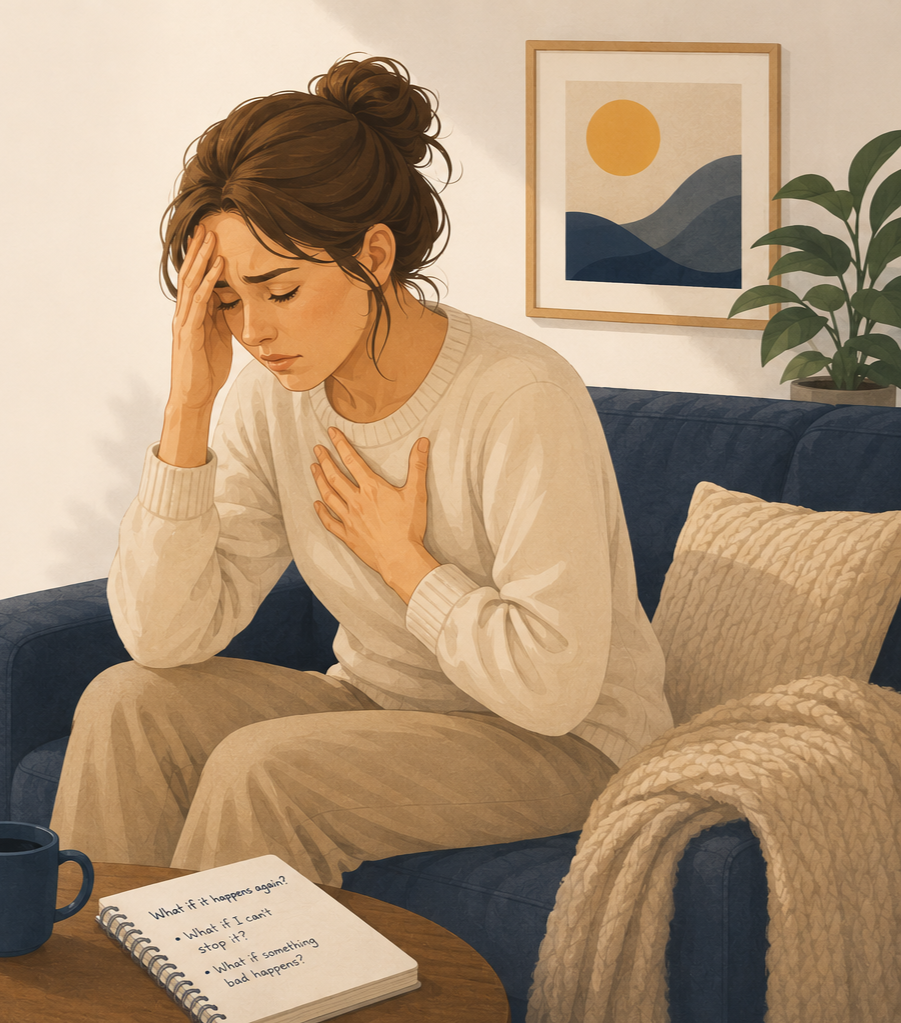
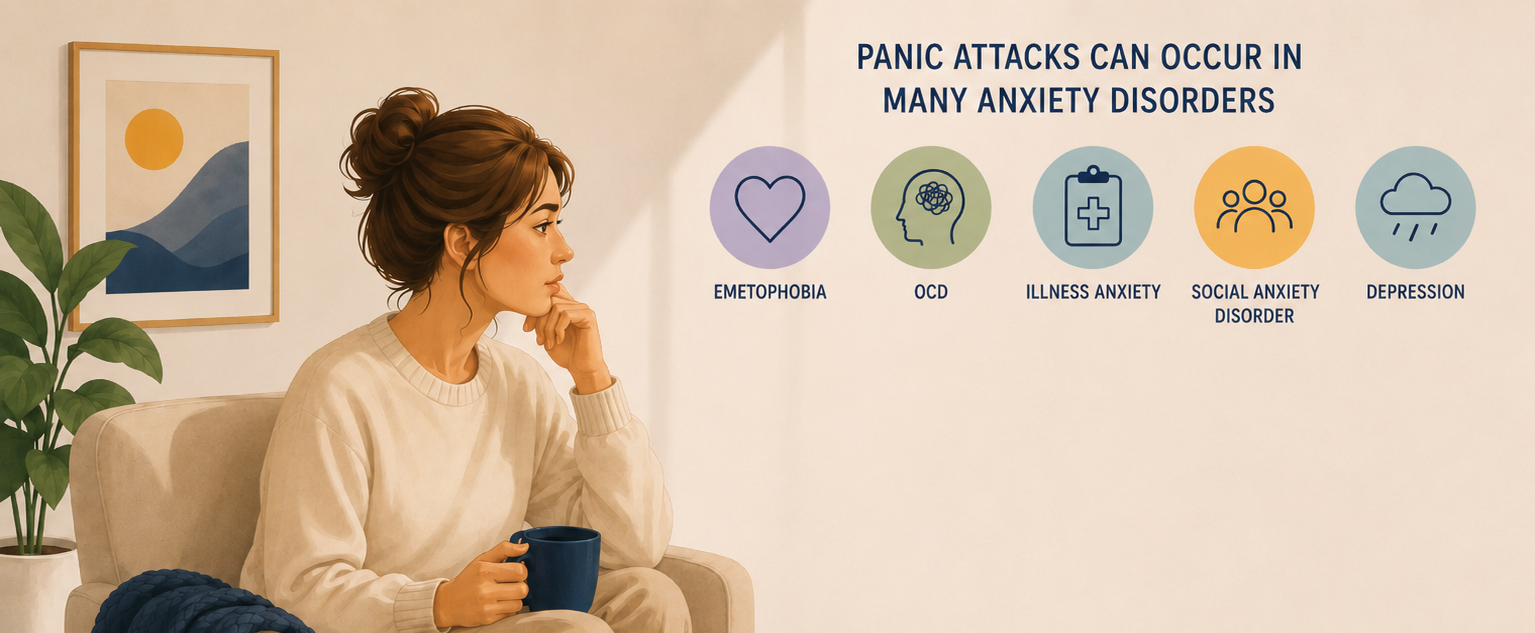
Panic Attacks In Anxiety Disorders
This usually these symptoms lead to a lot of worry about future Panic Attacks, and their consequences. This often leads to actions/behaviours designed to avoid having the Panic Attack or ways to manage through them.
Panic Attacks can also occur in multiple Anxiety Disorders such as Emetophobia, OCD, Illness Anxiety or Social Anxiety Disorder. It can also occur in those with Depression. If this is the case for you then it is also recommended to get treatment for that also and Panic Attacks will reduce as a result.
When Do Panic Attacks Become Panic Disorder?
Panic attacks become it own separate disorder if:
1) Panic Attacks start to become frequent.
2) Lead to long-lasting worry about future Panic Attacks.
3) Or if you start to worry during a Panic Attack that you are in danger e.g. "I am having a heart attack" or "I am going to go crazy".
Then it becomes its own anxiety disorder known as "Panic Disorder".
Panic Disorder Treatment: How CBT Can Help
The best treatment for panic disorder is known as cognitive behavioural therapy (CBT). This is a type of therapy which aims to help reduce your anxiety by helping you change your thought processes and how you act. This is surprisingly effective at stopping panic attacks and sometimes only requires 6-10 sessions.
How to Access CBT for Panic Disorder
CBT can be accessed in a few ways:
1) If you are in the UK, you can get CBT on the NHS. Speak to your GP or self-refer here → NHS
2) If you are in the UK, private CBT therapists can easily be found online. Sadly, CBT is not a protected title and many therapists falsely claim they use it. Find a therapist who is accredited by the BABCP.
3) You can use this page to help you recover.
4) I have a self-help guide that I wrote to help you recover at home. I wrote this during my time working in the NHS and based in on the tools I used to treat panic disorder and agoraphobia. This can be found on amazon, or a pdf version in my store.
What Is Agoraphobia? Symptoms, Fears and Avoidance
Firstly, Agoraphobia is not a fear of leaving the house. This is an inaccurate picture many people have due to how it is portrayed in films.
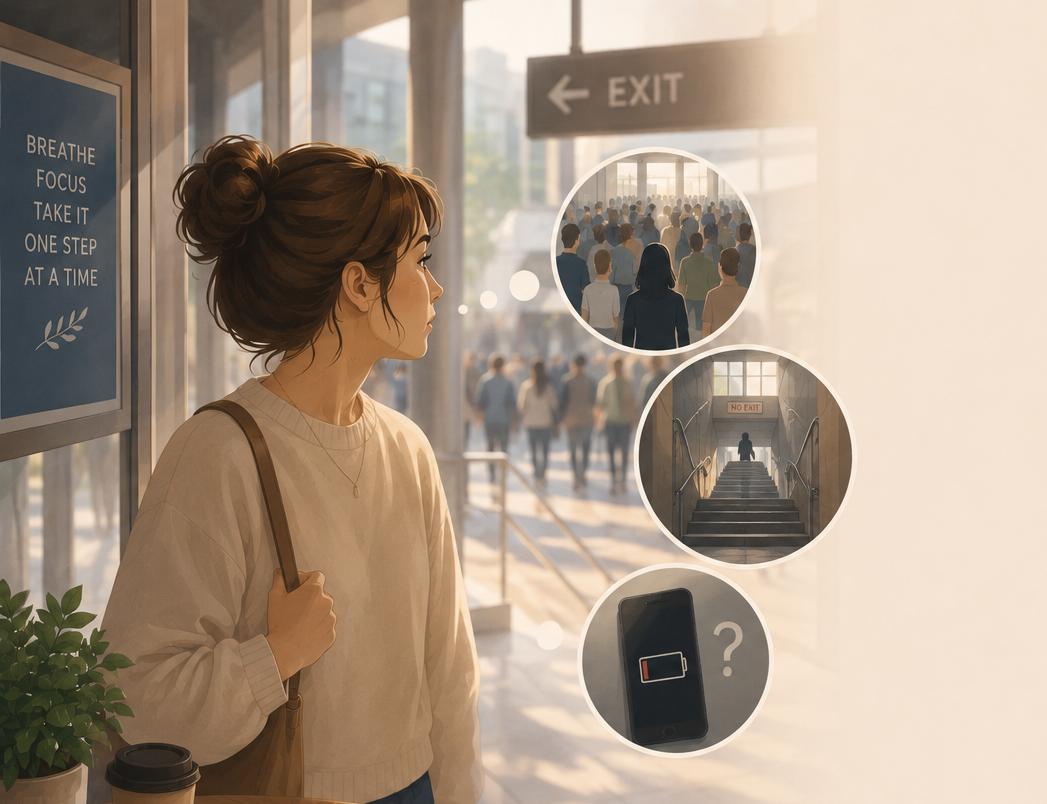
Instead, Agoraphobia is an overwhelming fear of situations where escape may be difficult, embarrassing, or where you feel help is not available if you were to experience intense anxiety or panic symptoms. Agoraphobia often doesn't get better with time unless you face your fear. This page will show you how to achieve this in an easy step-by-step approach.
Common Feared Situations For Those With Agoraphobia
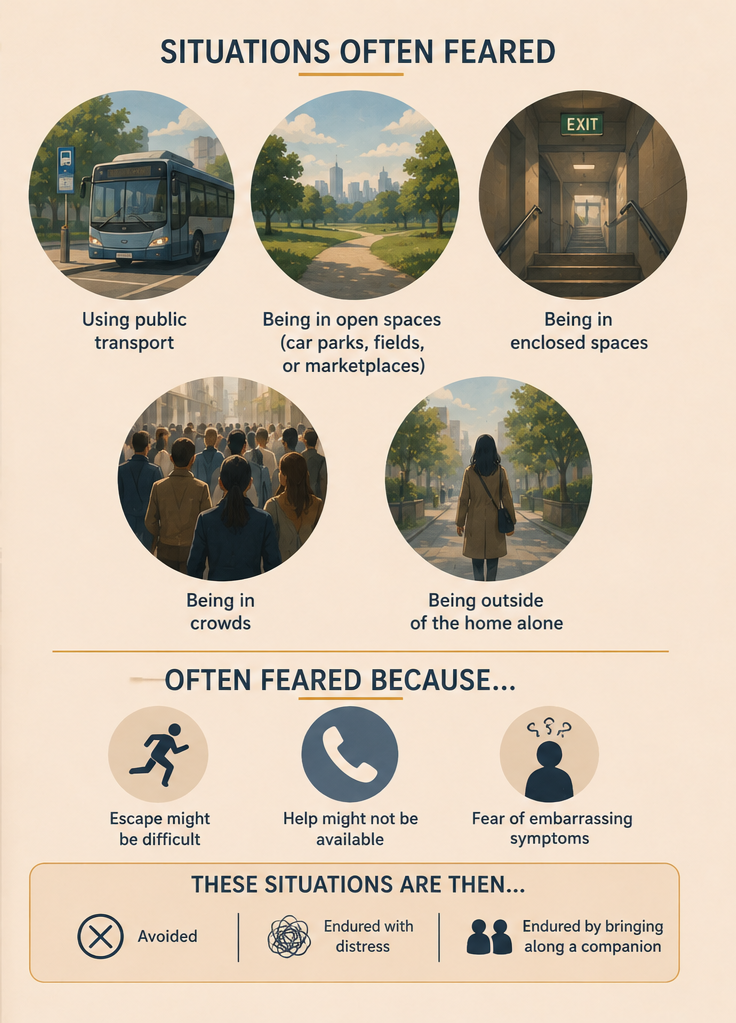
For a diagnosis of agoraphobia, you need to fear of two or more of the following five situations:
Using public transport.
Being in open spaces (such as car parks, fields or marketplaces).
Being in enclosed spaces.
Being in crowds.
Being outside of the home alone.
Often these places are feared because:
Of thoughts that escape might be difficult.
That help might not be available if you were to experience a panic attack.
Or a fear of embarrassing symptoms.
These situations are then avoided, or endured with distress, or by bringing along a companion.
Symptoms of Agoraphobia and Panic
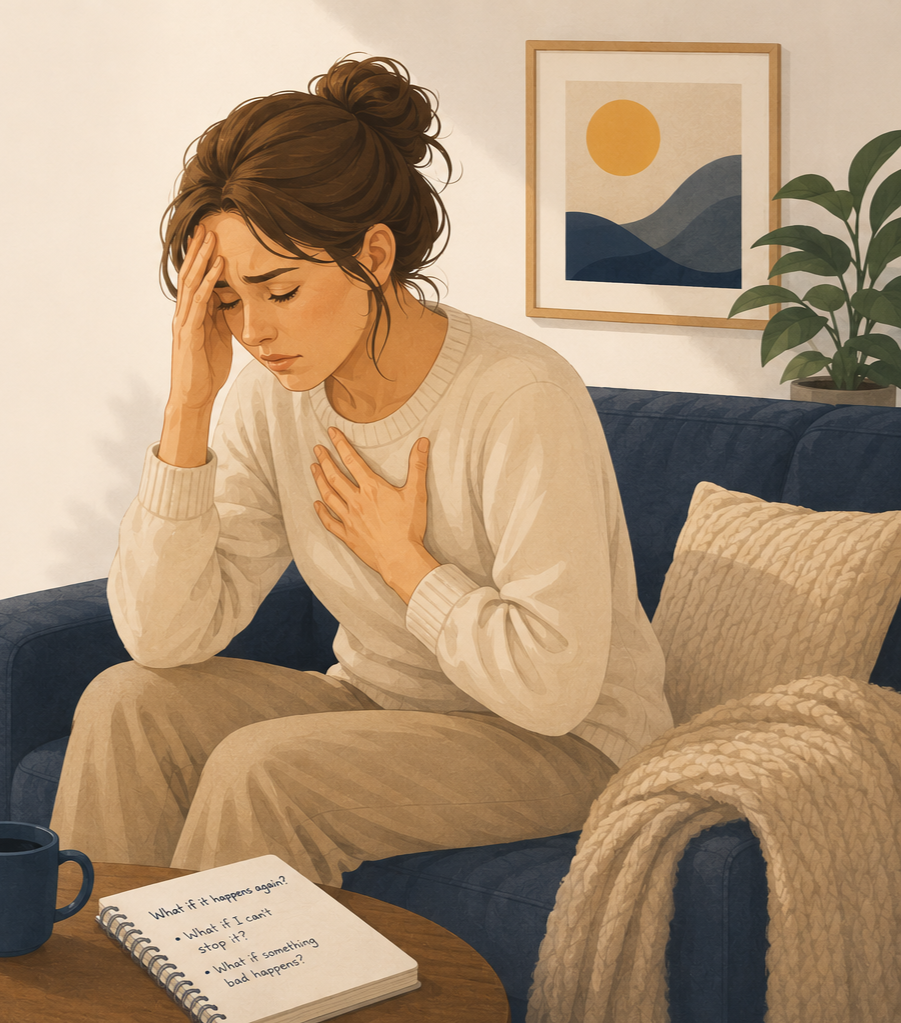
When in a feared situation alone you may feel sensations of fear and experience symptoms such as:
Nausea.
Palpitations, pounding or racing heart.
Sweating.
Shaking.
Shortness of breath.
Feelings of choking.
Chest pain.
Dizziness and feeling faint.
Chills or feeling hot.
Numbness or tingling.
Feelings of unreality or feeling detached from oneself.
Fear of losing control or going crazy.
Fear of dying.
Agoraphobia is also closely linked to Panic Disorder and it is possible to be diagnosed with both.
Agoraphobia Treatment: CBT and Exposure Therapy
The best treatment for agoraphobia is known as cognitive behavioural therapy (CBT). This is a type of therapy which aims to help reduce your anxiety by helping you change your thought processes and how you act. This is surprisingly effective at stopping both panic attacks and overcoming avoidance and sometimes only requires 6-10 sessions.
How to Access CBT for Agoraphobia
CBT for Agoraphobia can be accessed in the same way as for panic disorder.
1) If you are in the UK, you can get CBT on the NHS. Speak to your GP or self-refer here → NHS
2) If you are in the UK, private CBT therapists can easily be found online. Sadly, CBT is not a protected title and many therapists falsely claim they use it. Find a therapist who is accredited by the BABCP.
3) You can use this page to help you recover.
4) I have a self-help guide that I wrote to help you recover at home. I wrote this during my time working in the NHS and based in on the tools I used to treat panic disorder and agoraphobia. This can be found on amazon, or a pdf version in my store.
Free CBT Self-Help for Panic Attacks and Agoraphobia
Now we know what panic disorder and agoraphobia are. Lets start showing you how to stop them. This free help page is based on CBT and aims to give you the understanding of panic symptoms and how we can overcome this fear.