


Understanding emetophobia and breaking out of the cycle of reassurance seeking
Asking constant questions is making your emetophobia worse
Each time you seek reassurance, you teach yourself that you need someone else to make you feel safe.

What is reassurance seeking?
Reassurance seeking is when you try to get an answer from someone else, or from the internet or AI to help yourself feel certain that something bad won't happen.
For example:
“Do you think I'm going to be sick?”
“Does this food look okay?”
“Are you sure you don't feel ill?”
“Could I catch a stomach bug from this?”
“Does this mean I'm going to be sick?”
Googling symptoms or illness rates
Asking AI whether something is likely to make you sick
Checking social media or forums for reassurance
Repeatedly asking whether food has been prepared safely
There is nothing wrong with asking a question occasionally, that is normal. However, for those with emetophobia this does far beyond one or two questions. They can often try to get reassurance that their fears won’t happen over and over again. This can be in person by asking repeated questions to friends or family or it can be online by googling Norovirus rates, looking for social media information, or by posting questions on Facebook such as “I have eaten X, will I vomit?”.
Getting reassurance seems natural and everyone will do it from time to time. The problem is that reassurance-seeking is too effective at reducing anxiety. If you have a fear and someone tells you it’s definitely not going to happen. Bam! Your anxiety is gone. Great right?!….
From a therapy perspective…. not so much! If used too much, it turns you into a reassurance addict.

Examples of reassurance seeking include:
-Asking questions to friends or family members for verbal reassurance that they or others are not going to vomit.
-Asking questions about food poisoning or the chance of catching an illness.
-Asking friends or family members if they have recently been around anyone who was sick.
-Asking if certain activities, like eating out, could increase the risk of vomiting.
-Repeatedly asking if they look pale or unwell.
-Seeking reassurance that they will not get sick from touching certain objects or surfaces.
-Asking if it is safe to travel or attend events.
-Checking with others if they have experienced any side effects from medications.
-Asking if it is safe to eat certain foods during specific times, like before bed.
-Googling symptoms.
-Googling or looking up infection rates.
-Looking for reassurance on social media.
-Asking AI questions.
-Asking others if they are unwell.
-Asking repeatedly if the food they are about to eat is safe or has been prepared properly.
-Asking if food has expired or potentially contaminated.
-Asking if the environment has been cleaned or is dirt free.
-Asking if certain foods can lead to vomiting or are safe.


Reassurance seeking works to reduce anxiety
Reassurance seeking is an effective tool at reducing anxiety. However, it only provides relief from that one thought. So you have to keep using it on each and every anxious thought. This makes it a short term solution at best. But it also has a deeper problem. The more you seek reassurance, the more your brain thinks those anxious thoughts are helpful because it feels like you have avoided or prevented your fear from occurring due to the actions you took. So it produces more anxious thoughts about the same theme. This raises your anxiety overall in the long term, which causes you to seek even more reassurance. So rather than reassurance seeking making you less anxious, it actually makes you more anxious overall.
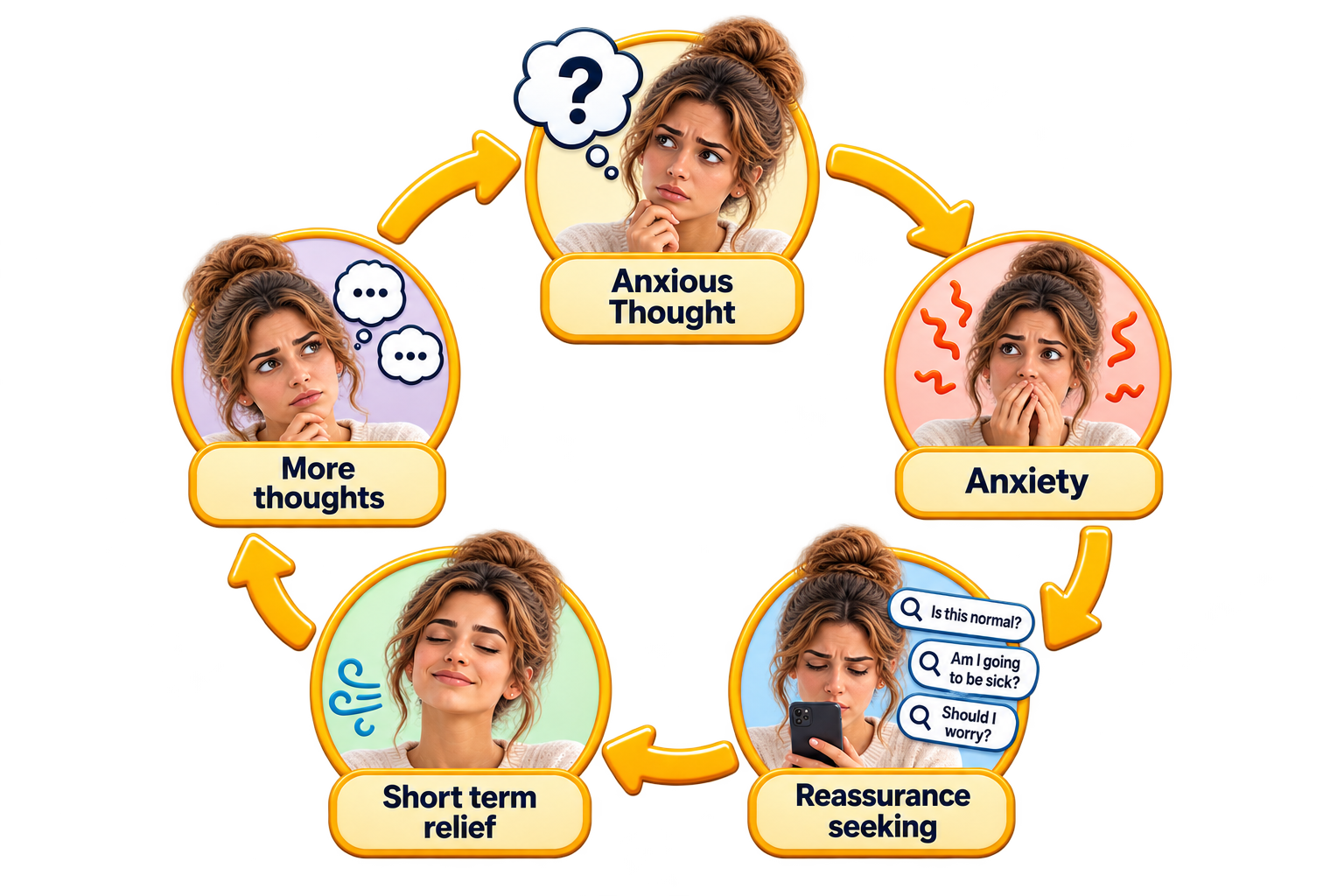

Reassurance seeking make Emetophobia worse for a few reasons
1) Reassurance seeking is addictive.
As reassurance-seeking is so effective at reducing anxiety it can become an automatic response for dealing with any hint of anxiety. Each time you are anxious, you feel the need to get more reassurance.
The problem with this is that reassurance acts just like a drug. You have the downsides of tolerance and dependence to deal with.
With each hit of reassurance, it starts to become less effective. Prompting you to need more of it. Think back to when you started reassurance-seeking, maybe you only needed to ask a single question before you felt relief. But now you may have noticed that you have to ask multiple times for the same level of reassurance. You may also notice you have to ask more frequently than you used to.
When your tolerance to reassurance builds up, you often start to doubt the answers you are getting. With this increased doubt comes more anxiety and more opportunities to reassurance seek.

2) Reassurance strengthens the belief that if you didn’t ask for reassurance something bad would have occurred:
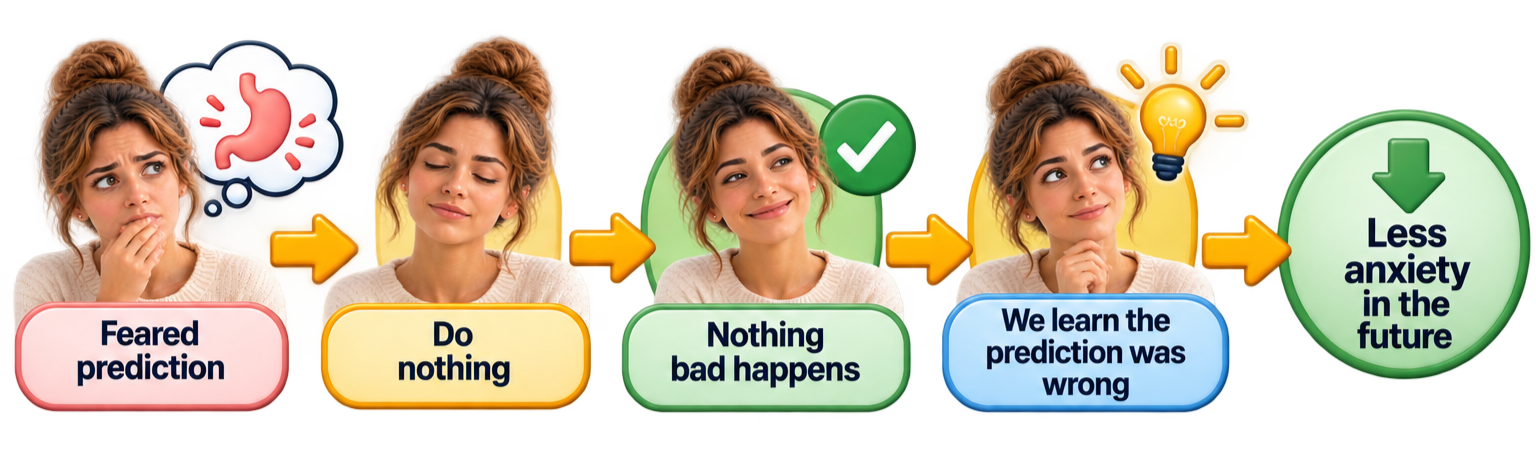
Usually, most of our worries do not come true. If we do nothing to try and prevent it from happening, then we can learn that our fears are less likely to occur than we thought and we naturally become less anxious over time. Looking something like this:
If we do nothing to prevent our fears then we can learn they are not as likely as we feared.
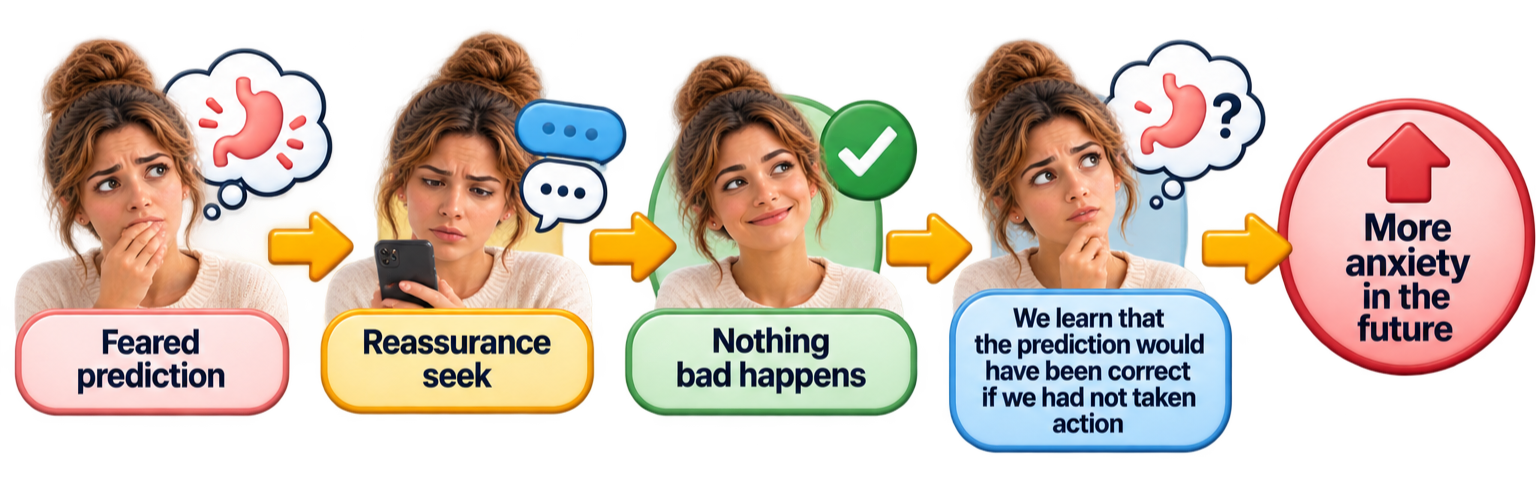
However, the act of reassurance seeking can disrupt this learning. When your fear doesn’t occur after getting reassurance, your body unconsciously thinks that the reassurance some how prevented your fear. This strengthens your belief in how likely your fears are to occur. Feeding your anxiety in the future and prompting more reassurance-seeking. Basically, when you reassurance seek you only increase your fear, even when you do not throw up.
3) Dependence on others:
Reassurance seeking creates a dependence on others for comfort and validation. This can reduce your own self confidence and ability to cope independently.
Frequent reassurance seeking can strain relationships, as it can become annoying or irritating for others to constantly provide reassurance about the same things.

4) More doubt:
Seeking reassurance is an attempt to reduce your own doubt about what will happen. However, over time actually increases doubt and uncertainty as you start to never feel fully satisfied with the answers you receive.
5) More thoughts
The more we reassurance seeking about something the more our brain see that topic has important and so it often produces more thoughts and mental images about it in the long term. So, in the long term you end up getting more scary thoughts about being sick or other problems.
6) More anxiety and nausea
When we have more thoughts and mental images about being sick or other worries we typically cause an increase in either our anxiety or our disgust response. Both of these can directly produce nausea. This nausea then gets used as a sign that you ae going to be sick. Prompting more anxiety and the need to seek more reassurance.

So, if reassurance seeking has all of these downsides why do we do it?
When people decide to use reassurance seeking as a strategy to manage their anxiety, it is because they think its helpful. This is because they struggle with tolerating any uncertainty about if they are going to vomit or not and it is so effective at reducing their anxiety (in the short term).
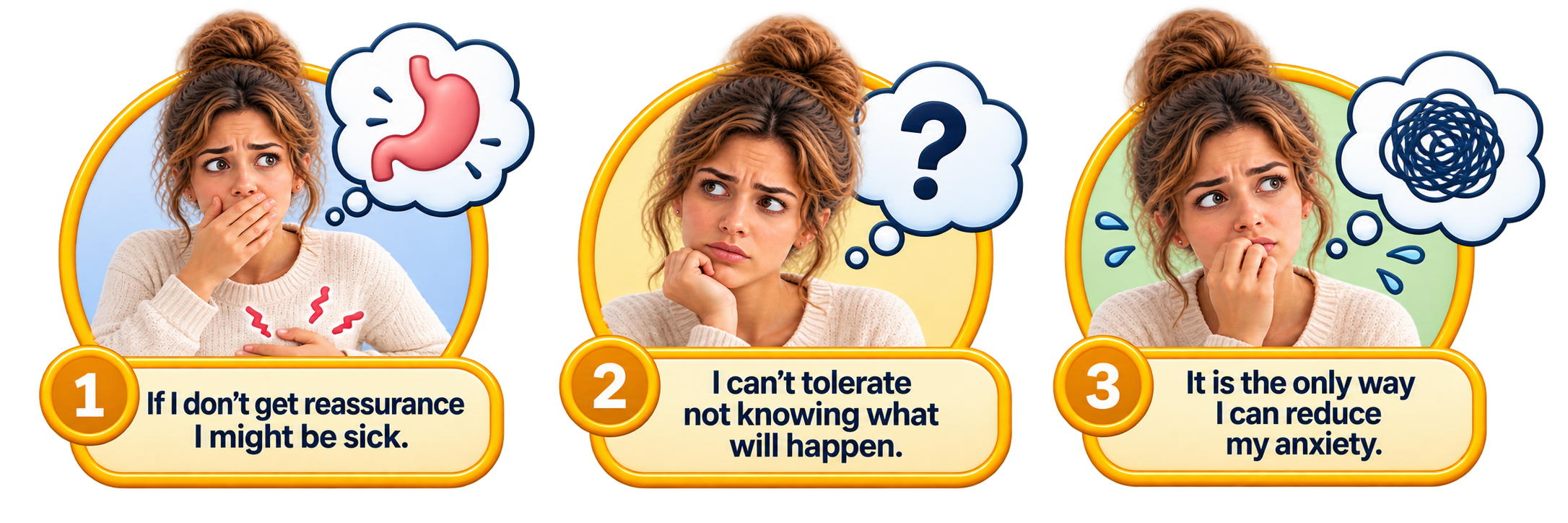
It basically comes down to these views:
I need to reassurance seek because:
1) If I don’t get reassurance I might be sick.
2) I can’t tolerate not knowing what will happen.
3) It is the only way I can reduce my anxiety.
You need to stand up to your emetophobia without reassurance seeking:
To overcome emetophobia you need to reduce, delay or stop reassurance seeking.
We can do this by standing up to your anxiety by imagining anxiety is just like a phone notification. Just because you receive a notification, doesn’t mean you have to open it.
This notification is just a thought that something will go wrong (e.g. “I might vomit”, “this food might be off”, “what if I catch a stomach bug”) but thoughts are not fact. It doesn’t mean it is true.
You need to recognise this notification and choose not to react to it because 99% of the time, these thoughts are not accurate.
You have to be willing to endure some short-term anxiety, to reduce your anxiety in the long term. The next page shows us how we can actually stop this unhelpful reassurance seeking.

Are you ready to try to stop reassurance seeking?
If you are still not ready, you might benefit from 1:1 support.
Therapy from someone who truly understands emetophobia
Finding a therapist who understands emetophobia can be surprising difficult.
I’m David Kaneria, a BABCP accredited CBT therapist who specialises exclusively in treating emetophobia.
I’ve dedicated my career to learning about this condition, treating people with emetophobia and helping other therapist understand how to treat it effectively.
I’ve also written a textbook specifically about treating emetophobia.
David Kaneria
BABCP Accredited CBT therapist & Emetophobia specialist.