

Free Depression Self Help - Part 2: Activity Monitoring
Learn how to overcome depression at home - Part 2:
This series is dedicated to helping you understand what depression is and how to overcome it without the need for therapy.
Content Page:
This guide is split into 4 parts. Each with a video, worksheets and tasks.
Part 2: How to overcome depression with activity monitoring.
If you have watched part 1, you should understand how our lack of rewards and increase in stressors cause us to use avoidance patterns.
The key to overcoming Depression is to change this cycle by:
Increasing our “Rewards”.
Overcoming our “Stressors”.
Preventing “Avoidance Patterns”.
The first step is achieving this is to get good at identify these patterns. We can do this by something called “Activity Monitoring”.
Watch the video below to understand how to use Activity Monitoring
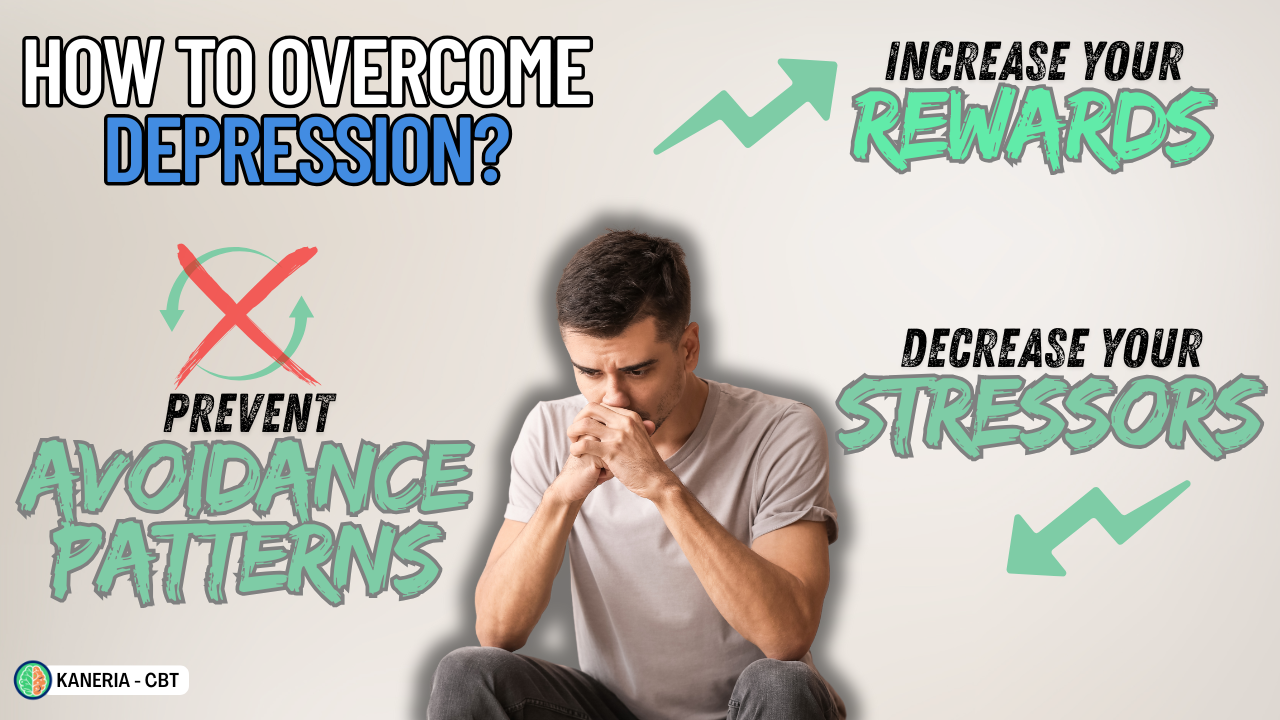
Part 2 - Activity Monitoring:
Once you have watched the video you should hopefully have a good understanding of how to use Activity Monitoring.
Before moving onto the next video, download the worksheet and monitor your activities for one week.
Click on the image to download the worksheet.


Once you have done this for a week.
Look over your diary. Try to figure out what activities lead to either high or low:
Pleasure ratings.
Achievement ratings.
Mood ratings.
Try to find any Avoidance Patterns. Things you have done:
To avoid a negative feeling.
Due to low motivation or tiredness.
To prevent or avoid a feared outcome.
Only to over compensate to stop a feared outcome.

These Avoidance Patterns often give us a lack of pleasure and achievement and lead to a reduction in our mood.
Examine if any of these Avoidance Patterns are leading to:
A reduction in Rewards (e.g. withdrawing from people).
An increase in Stress (e.g. important tasks being left undone).
A continued low mood.
Up Next: Part 3 - Activity Scheduling:
Hopefully you can see how your Avoidance Patterns and low value activities are leading to an increase in your depression.
Now its time to make a change. This is where “Activity Scheduling” comes in.

Think you need 1:1 support to overcome your Depression?
Although I specialise in treating Emetophobia, I have considerable experience working with depression.
If you feel depressed and low, speak to me today because it doesn’t have to be this way.

Written by David Kaneria