
How to stop panic attacks and agoraphobia
Part 3 - The role of safety behaviours
This page is all about helping you overcome your panic attacks and agoraphobia. I hope you find it helpful.
Up to this point you should have a good understanding of:
What panic disorder is.
Why we experience panic attacks
What symptoms anxiety can cause
And have kept a panic diary for a few weeks.
If you have not done this yet, go back to parts 1 and 2.
Part three consists of:
Understanding safety behaviours.
Understanding how safety behaviours cause panic attacks.
Understanding behavioural experiments.
Creating your own experiments.
Understanding safety behaviours:
If you have read the previous sections and have completed your panic diary you should now have a good understanding of how panic attacks are caused by an interplay between your thoughts and physical sensations. However, there is another really important part of the puzzle which explains why you keep believing your misinterpretations despite them rarely or never coming true. This is due to actions called safety behaviours.
What are safety behaviours?
Safety behaviours are any action you may be tempted to use to prevent your anxious prediction from happening or to try and monitor, prevent or stop your panic attacks. While they seem harmless or even helpful, these behaviours actually cause you to continue to have panic attacks. This is because they can convince you that the worst would have happened if you did nothing to prevent your fear.
Let’s demonstrate this using an analogy I like to call “barking at the postman”.
“Barking at the postman”
We all know that most dogs bark at the postman. Lets imagine a dog who is scared of the postman. When the postman comes close to the house, the dog perceives a threat. The dog thinks that the postman is going to break in or is a danger in some way.
So the dog barks!
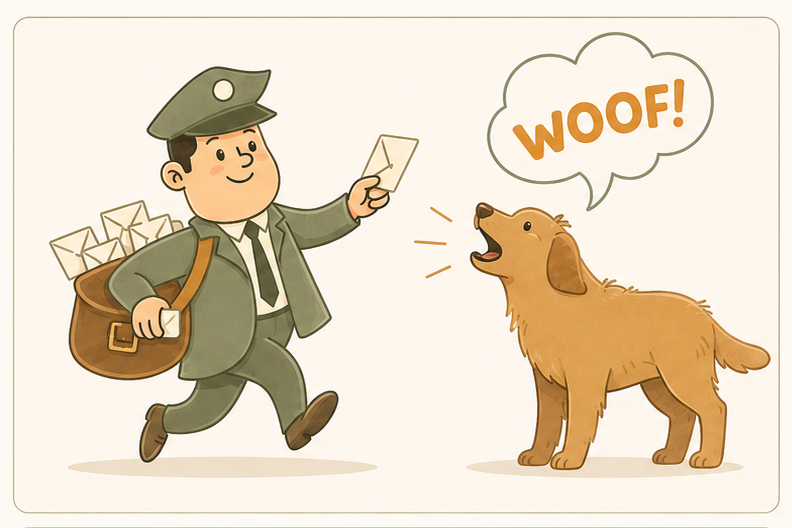
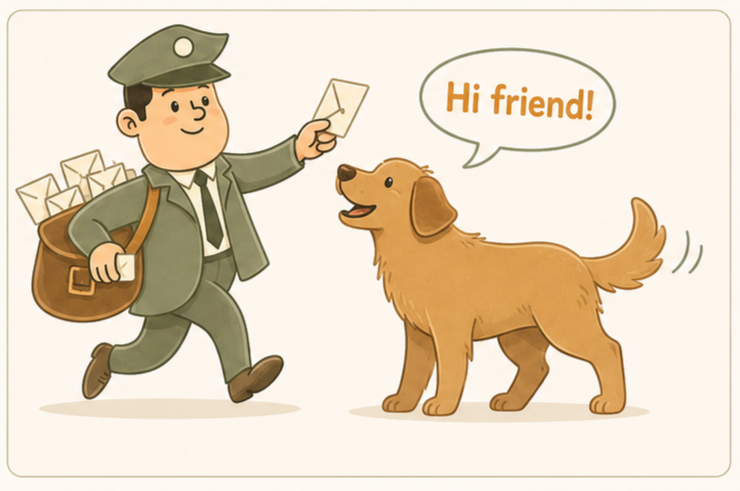
And the postman posts his letter and walks away.
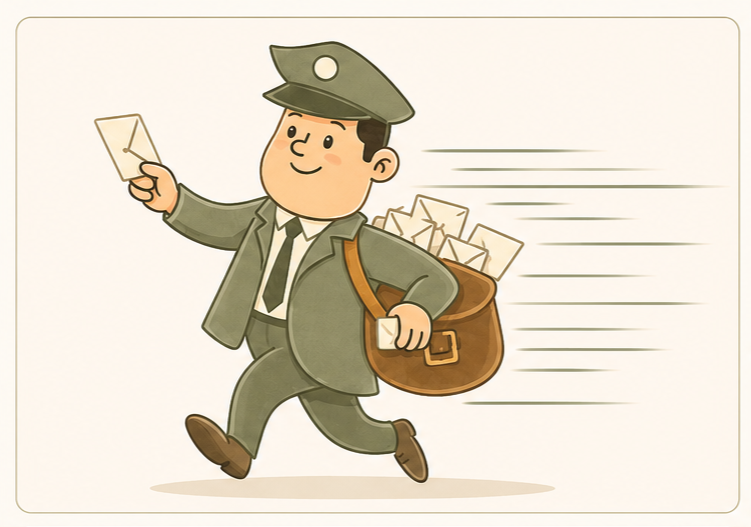
The dog congratulates himself on getting rid of the threat. He learnt that barking keeps the postman away. Good boy!
However, we all know the postman would have walked away on his own. Each time the dog sees the postman he still sees him as a threat and barks. He thinks his barking is working.
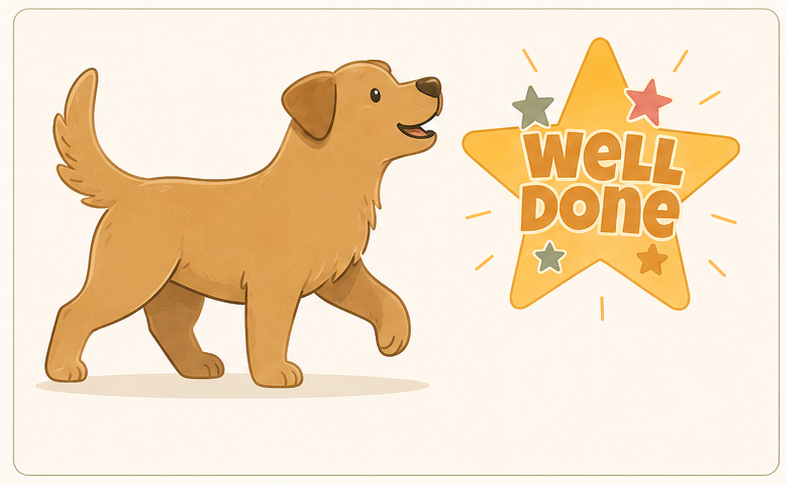
Now imagine you could speak with dogs and you ask him to take a “risk” and not bark at the postman for the week.
The dog see’s the postman coming and does not bark. To his surprise the postman posts his letter and walks away… He thinks “maybe I got lucky, I am sure he will break in next time”.
The day next comes, and the next day after that. The dog doesn’t bark and the postman still hasn’t broken in. Soon the dog realises he was wrong and that the postman was not trying to break in.
Key message:
When we use our safety behaviours we never get to see what would have happened if we did nothing. We are barking at the postman even when he was going to walk away anyway.
So, we need to test out our predictions of what will happen by facing our fear without trying to prevent it.
Safety behaviours only keep you trapped feeling anxious, even when nothing bad happens.
Want more detailed information?
I have written a whole practical guide to overcoming panic attacks and agoraphobia based on my years working in the NHS treating both conditions. The book can be found on amazon or in my webstore.
Written by David Kaneria

CBT Therapist
Author of
‘Therapy for Panic Disorder and Agoraphobia Made Easy’
How safety behaviours cause panic attacks
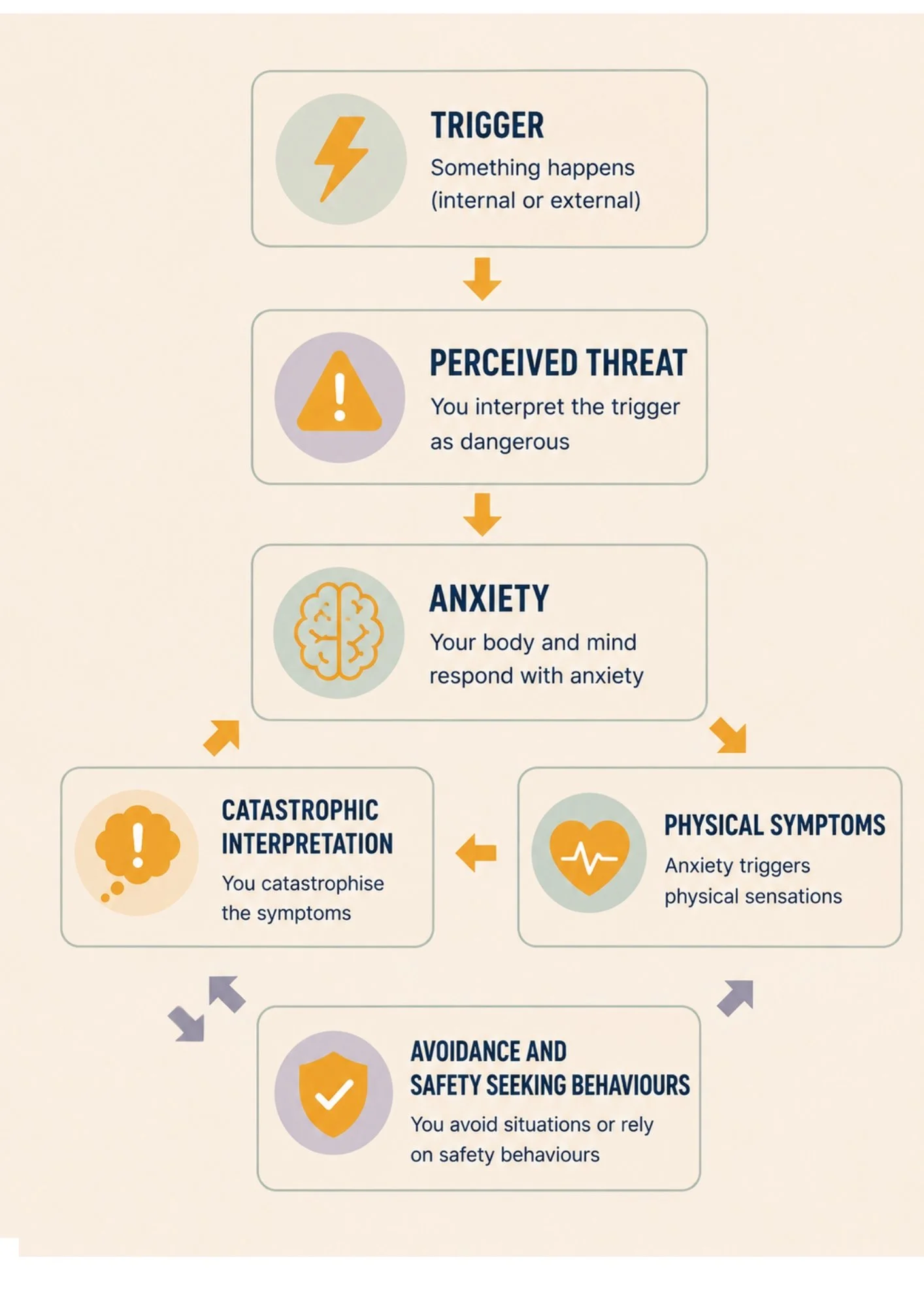
The main way safety behaviours cause panic attacks is that they feed your catastrophic misinterpretation of these symptoms. This is because they block you from being able to disprove these misinterpretations. So the next time you have the same physical feeling, your brain automatically makes the same interpretation and you end up using a safety behaviour again. This can be seen with the two white arrows on the diagram between your catastrophic interpretation and avoidance and safety behaviours.
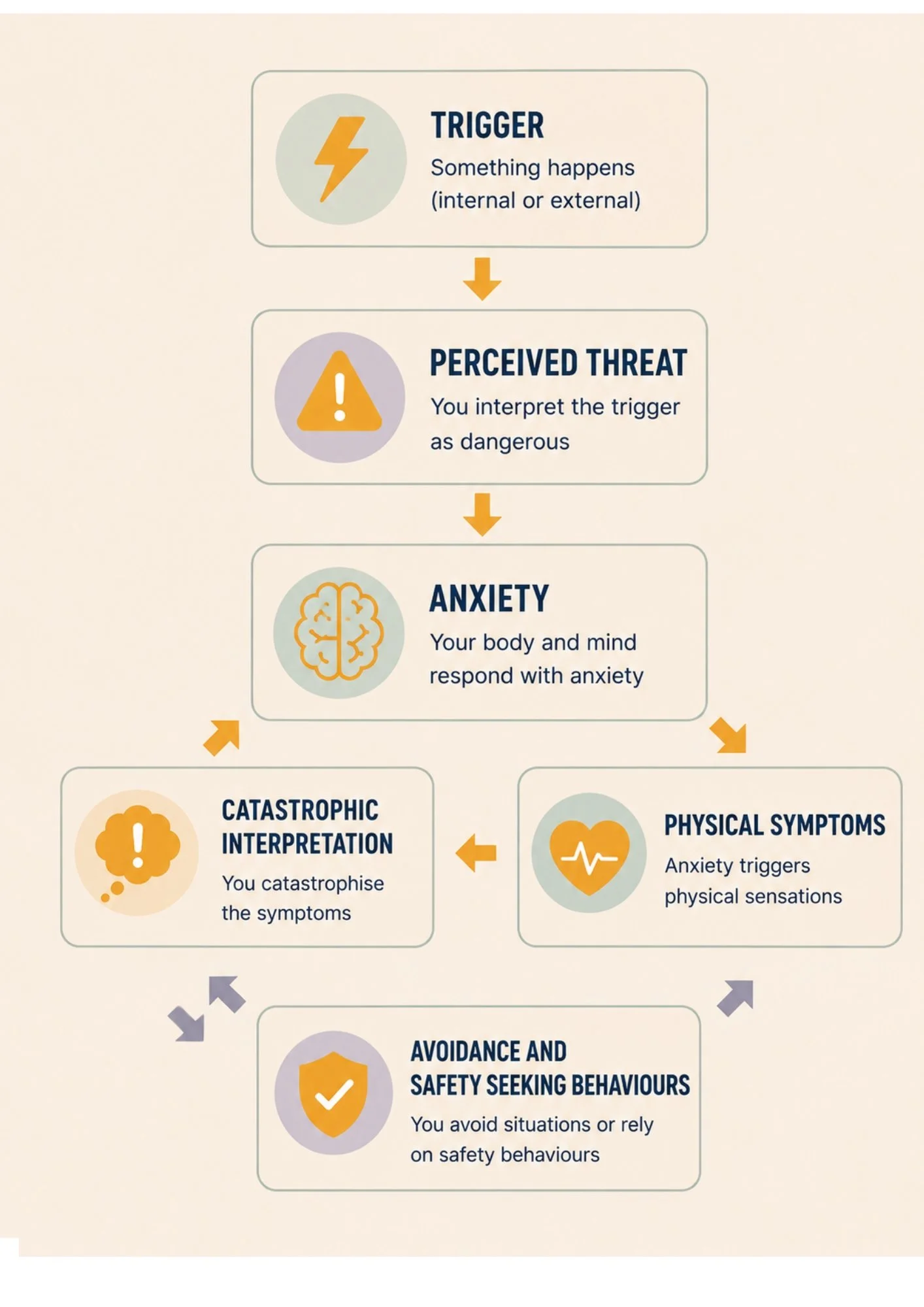
Another way safety behaviours can cause a panic attack is that they can directly cause anxiety symptoms or worsen. For example, if you have a tight chest and have the interpretation that you can not breathe you might try to take more rapid breathes to get more oxygen in. This backfires and causes your symptoms to worsen.
Also ,there are times we want to use a safety behaviour but can’t for some reason, this raises your anxiety further and causes more symptoms.
In some cases our safety behaviours can heighten the situation. For example, if you call for an ambulance, then people around you might panic or buy into your misinterpretation, which convinces you more in it.
This can be seen as the right most arrow on the cycle. Out behaviours often make these symptoms worse. In some cases, these actions work and reduce our physical sensations. Which sounds like a good thing but in reality it often validates your interpretation or provides short term relief but heightens your fear of future panic attacks as you feel you got a ‘lucky escape’.
Example safety behaviours
Safety behaviours are any action you take to prevent your fear from happening or to monitor, prevent or avoid panic attacks. These actions are usually very unique to you and your personal experience but examples can include:
Preventing our misinterpretation: People often take actions to prevent their interpretation from occurring or acting as if it is true. For example, opening windows to prevent suffocation, calling for an ambulance for a heart attack, taking anti-sickness tablets for nausea, trying to breathe through the anxiety, or listening to calming music or podcasts to reduce anxiety.
Avoidance: We avoid situations we think are going to be unpleasant. But as we do so, we never learn that we can cope with them.
Control: Attempting to control a situation is another common safety behaviour. We can attempt to be close to exits, only go places we know, research a place before going, taking medication or substances to exert control over the outcome of the situation or our level of anxiety. This again backfires as you never learn we can cope in situations outside of our control and makes those situations outside of your control feel scarier (which may actually trigger the onset of a Panic Attack).
Distraction: Distraction can be a powerful safety behaviour. Distraction can be when we overly focus on an object, thought process (such as wishful thinking) or another task (such as listening to music). However, if we think this through logically, the fact that distraction works to reduce anxiety proves that nothing in the situation is dangerous. For example, distraction wouldn't stop a bad thing such as a heart attack from occurring. This safety behaviour stops us from learning this.
Reassurance: We can start to rely on others for safety. For example, only going to locations with certain people. Or asking others if everything is going to be okay, or if they think a panic attack will occur.
Objects: We can carry objects in an attempt to stop or reduce panic attacks. These objects can be anything, from lucky charms to carrying medication "just in case", or even carrying around a bottle of water.
Breathing techniques: Most people try to change their breathing to calm down. Usually these backfire by either causing your symptoms to worsen or teach you that you must do so to prevent or cope through a panic attack.
This isn’t a full list and almost anything can become a safety behaviour if used to try and prevent your anxious interpretation in the moment of panic. Have a look at your panic diary and reflect on the actions you take to cope with your panic attack. these actions most likely feel helpful and necessary but they might be the very things making the problem worse.
Understanding behavioural experiments:
To stop panic attacks, we need to learn one very important thing:
That our catastrophic misinterpretation of these symptoms is incorrect.
Going back to the ‘barking at the postman’ idea, it is incredibly hard to learn this lesson when we are using our safety behaviours. They block us from learning we are safe. So, to get better we have to stop barking at the postman (stop using safety behaviours). Only then can we change our point of view.
The strongest and easiest way to achieve this is by using something called a ‘behavioural experiment’. A behavioural experiment is just a way to test out if our thoughts are correct by changing how we act. Let’s use a silly example to show how this works. Imagine I was holding a battery in front of me and had a thought that ‘if I drop this battery, it will just float in mid-air’.
How could I test how true this thought is?
Drop the battery and see what happens. If the battery floats, I know my thought was true, but if it falls, I know that my thought was incorrect. That is a behavioural experiment. The reason they work so well is that they provide physical proof of how true our thoughts are. The battery either falls or doesn’t. Either way we learn something about the thought we are testing.
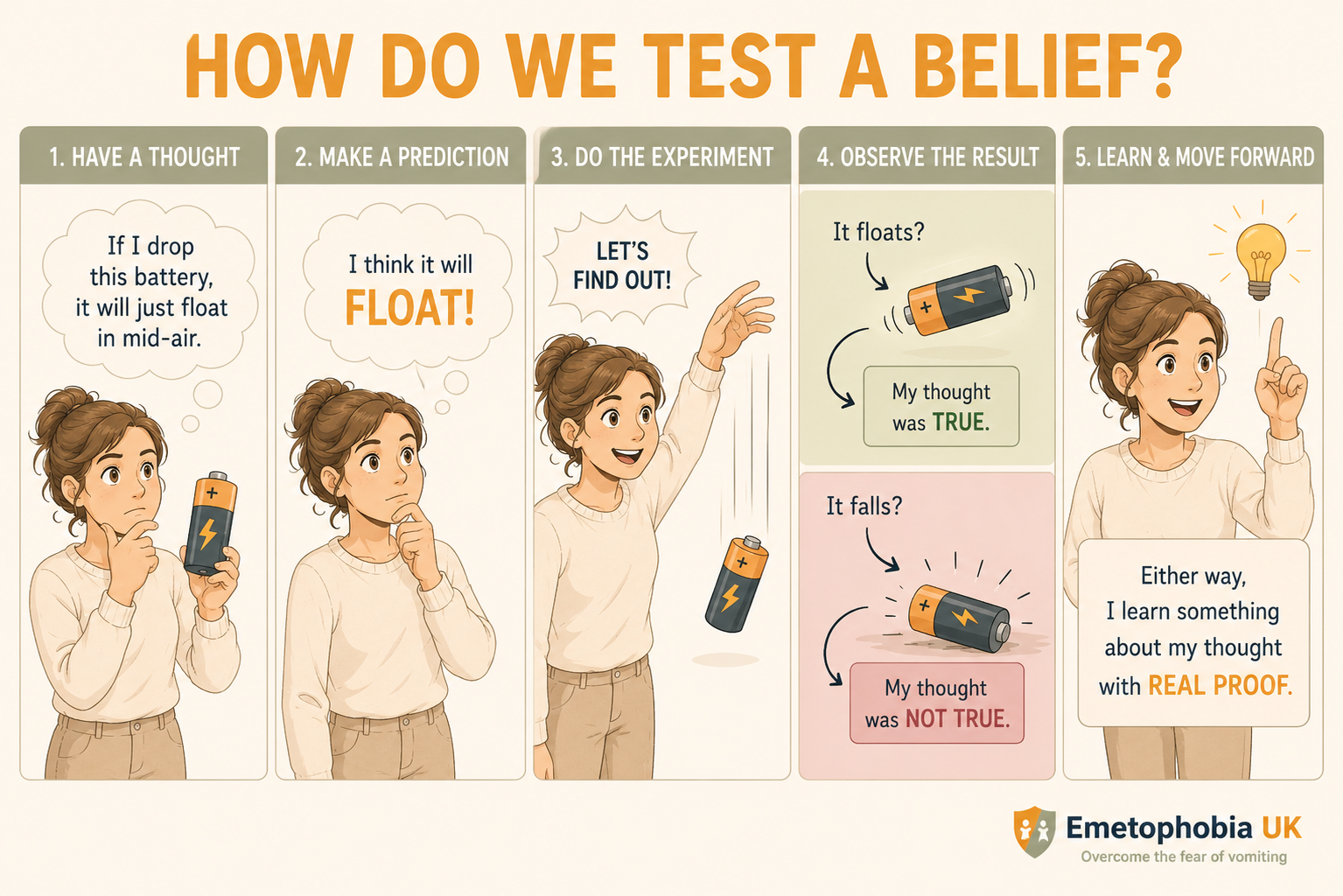
Another example of this goes back to the barking at the postman idea. If the dog purposely decides to not bark at the postman the next time he see’s him and nothing happens. He can learn if his thought about the postman trying to break in is true or false.
If you have the courage to try using behavioural experiments, you will get better from panic disorder.
Creating your own behavioural experiments:
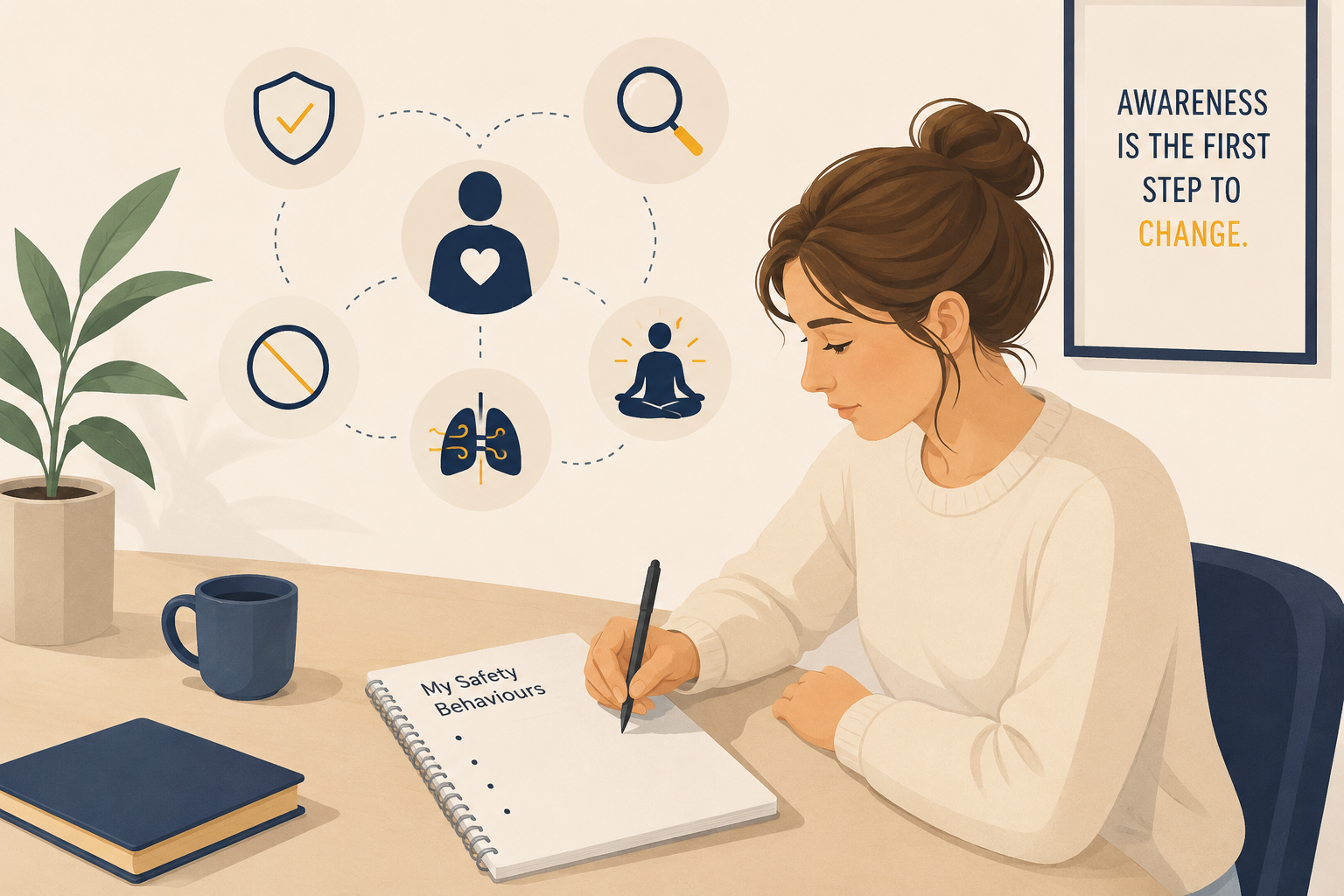
Behavioural experiments are quite simple to create, but they do require a little creativity. Before you can design an experiment, you first need to identify the safety behaviours you use when you feel anxious or panicky.
You have already started doing this through your Panic Diary. Look back over the behaviours you wrote for your “coping behaviours.” Many of these may actually be safety behaviours. You do these things you do to prevent a panic attack, keep yourself safe during one, or make the anxiety stop as quickly as possible. But they are only causing you to get more panic attacks in the long term.
If you struggled to find your behaviours. try to complete the following sentences:
To prevent a panic attack, I…
To prevent a panic attack, I avoid…
When I am having a panic attack and believe I might be in danger, I…
To try to make a panic attack stop, I…
Safety behaviours are not always obvious. They can include things you do, things you avoid, things you check, ways you distract yourself, Ways you control your breathing, or ways you try to control or escape uncomfortable sensations.
Make a list of these behaviours now.
Creating a Behavioural Experiment
Now you have a list of your safety behaviours, the next step is to test them. Rather than assuming these behaviours are keeping you safe, we want to find out whether they are actually needed.
A behavioural experiment has four main steps:
1. Decide what you are testing
Start with the catastrophic thought or prediction you have during a panic attack. This should reflect your worst fear and the catastrophic misinterpretation you identified earlier.
For example:
“If my heart beats too fast, I will have a heart attack.”
But we are also testing a second belief:
“I need my safety behaviour to stop this from happening.”
For example:
“I need to sit down and control my breathing, otherwise I might have a heart attack.”
So, your experiment is testing both whether the feared outcome will happen and whether your safety behaviour is actually needed to prevent it.
Download the chart below or make your own on a piece of paper.
Start by writing down your:
1) Catastrophic thought or prediction
2) Write down your safety behaviour.
2. Design your experiment
Next, think about how you could put these predictions to the test.
This might involve:
Facing something you normally avoid.
Reducing or dropping that safety behaviour.
Doing both at the same time.
Experiments often work best when you face a situation where you might normally panic without relying on your usual safety behaviours.
For example, you might go somewhere you normally avoid because you fear having a panic attack and, while there, resist your usual attempts to control, prevent or escape the panic.
The aim is not to make yourself panic. The aim is to create an opportunity to discover what happens when you stop trying to protect yourself from it.
On your chart:
Design a way to put your safety behaviour to the test. If you can’t think of a way, ask a friend or use AI help you create your experiment.
3. Do the experiment
Now comes the challenging part: give it a go.
Try to follow the experiment you planned, even if anxiety or panic occurs. Remember that the point of this is to gather evidence. You cannot find out whether your prediction is true if you continue doing the things you believe are preventing it from happening. Remember the dog barking at the postman.
4. Reflect on what you learned
Your your experiment, look back at what actually happened and compare it with what you predicted would happen.
We are interested in two important questions:
Was your original catastrophic prediction correct?
Did the thing you feared would occur actually happen?What happened without your safety behaviour?
If your feared outcome did not happen even though you reduced or stopped the behaviour, what does this tell you about whether that behaviour was actually keeping you safe?
For example, if you believed “I will have a heart attack unless I sit down and control my breathing,” but allowed your heart to race without doing either and no heart attack occurred, you have learned something important about your original thought.
Perhaps the racing heart was a symptom of panic rather than a sign of a heart attack, and perhaps controlling your breathing and sitting down were never preventing a heart attack in the first place.
Each experiment gives you an opportunity to test your old explanation against the evidence and gradually develop a more helpful understanding of what is happening during panic. The aim is to shift you away from your old view of seeing these symptoms as dangerous, and helping you realise that they are all just symptoms of the fight or flight response.
Going back to our panic cycle. The thing driving the cycle on is interpreting these symptoms as scary or dangerous. Once you truly realise your misinterpretation is incorrect and that all these symptoms are just normal anxiety symptoms and not a threat. Anxiety stops escalating to panic. This is not to stop you ever feeling anxious, but to stop you being afraid of feeling anxious.
Keep repeating experiments until you have learnt:
1) Your symptoms are unpleasant but not dangerous.
2) Your safety behaviours are not needed.
The only way to learn this is to start going to the places you fear and putting these behaviours to the test.
What if I panic during the experiment?
You might have a panic attack during your experiment. That does not mean the experiment has gone wrong.
The experiment is not testing whether you can prevent yourself from feeling anxious or having a panic attack. If your goal becomes “I need to do this without panicking,” you can easily end up trying to control the panic again and use your safety behaviours more.
Instead, the experiment is testing what you believe the panic means and whether you need your safety behaviours to protect you from what you fear will happen.
For example, imagine your prediction is:
“My nausea means I am going to be sick”
During the experiment, you notice feeling nauseous and you have a panic attack. This might feel like things are going wrong, but this is actually an opportunity to test your prediction.
Allow the nausea and don’t do anything to prevent being sick. That way you can learn if nausea when anxious leads to being sick or not.
In fact, having a panic attack can sometimes make an experiment more useful. You get to experience the sensations you fear, drop the behaviours you believed were keeping you safe, and discover what happens.
The success of an experiment is not measured by how calm you felt. It is measured by what you learned.
When you truly learn these symptoms are just anxiety symptoms and not your worst fear coming true, then your panic attacks start to reduce or completely stop in the long term.