

What Causes Panic Attacks? Understanding Symptoms and the Panic Cycle
Part 2 - Understanding Panic Attacks and Why They Happen
Navigation Page
This page is all about helping you overcome your panic attacks and agoraphobia. I hope you find it helpful.
Up to this point you should have a good understanding of:
What panic disorder is.
The best treatment for panic disorder.
If you have not read this yet, go back to part 1.
Part 2 consists of:
Already read this? Go to part 3

What Causes Panic Attacks?
What Is a Panic Attack?
A Panic Attack is when you get a intense rush of physical sensations which cause you to spiral, and become highly anxious and panicked. Panic attacks occur when someone gets an uncomfortable physical symptoms they either misinterpret as dangerous, or interpret as the first sign of a panic attack occurring.
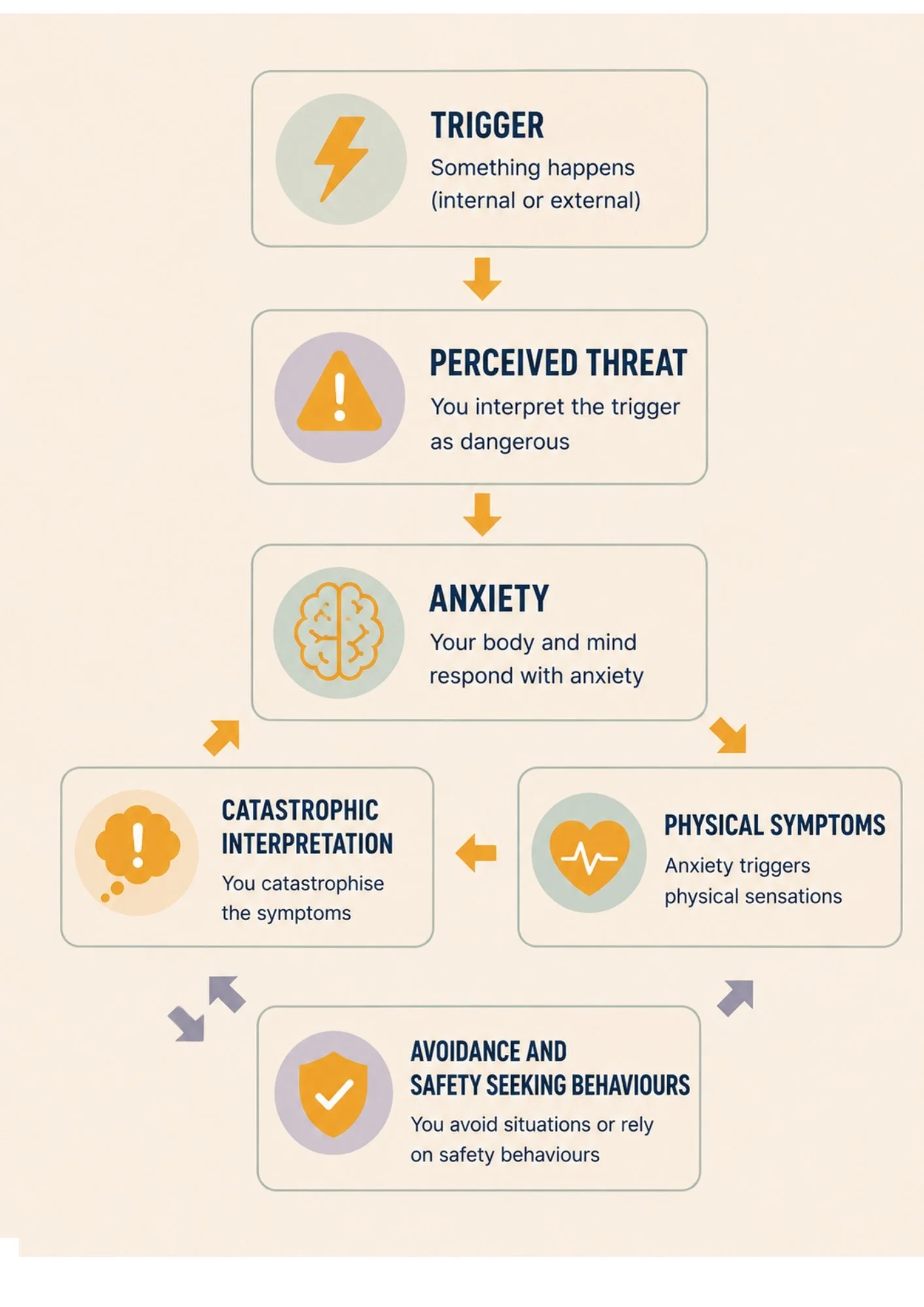
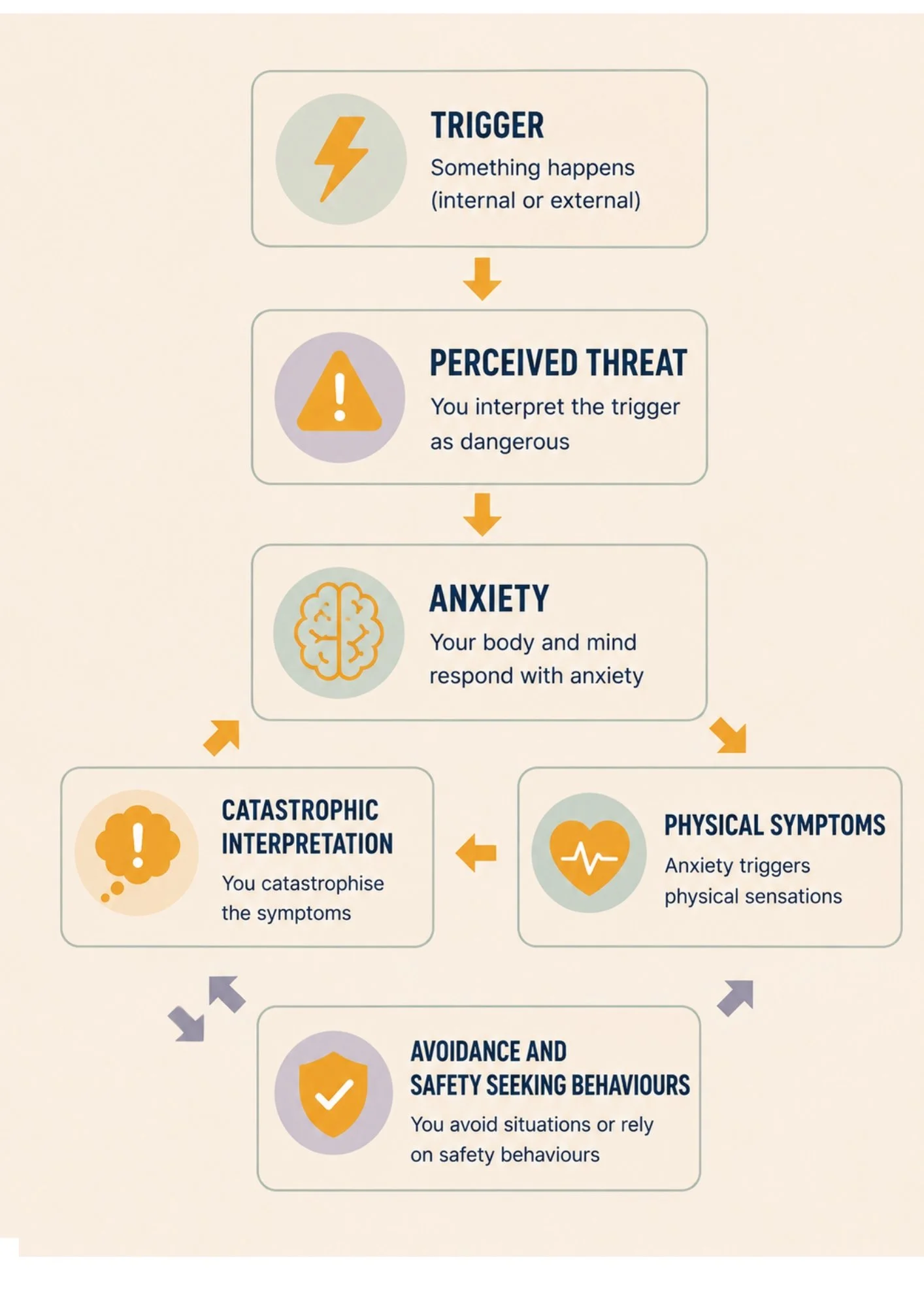
A panic attack will always follow a typical cycle which looks like this:
The Panic Attack Cycle: How Panic Attacks Develop
A panic attack always starts with a trigger. This can either can be an internal or external trigger.
Internal triggers are things that occur inside of your body. These are troublesome symptoms such as nausea, a heart flutter or changing in your breathing or a scary mental image or thought. These symptoms usually are caused an external event or underlying stress in your life. However, most people usually miss the cause of the symptoms and so they feel like they come out of nowhere.
External triggers are stressful events that you perceive through your senses (sight, sound, situation) before the physical symptoms even begin. Examples can include crowded places, feeling stuck, or being in a stressful situation.
These triggers or symptoms are perceived as some sort of threat. For example:
You might fear being sick, feeling trapped or that the situation is unpleasant or hard in some way.
This naturally leads to the sensation of anxiety. Anxiety is an emotion that occurs when your bodies thinks that they are in a threatening situation. It reacts to the perception of danger. So you can feel anxious even when there is no real danger.
Our anxiety system comes with a whole range of physical symptoms that can feel incredibly intense. Such as:
Nausea.
Palpitations, pounding or racing heart.
Sweating.
Shaking.
Shortness of breath.
Feelings of choking.
Chest pain.
Dizziness and feeling faint.
Chills or feeling hot.
Numbness or tingling.
Feelings of unreality or feeling detached from oneself.
As most people don’t realise their original trigger, these sensations are often the first thing people notice. Due to this, people can start to make assumptions and interpretations about what is happening to them and where these symptoms are coming from. As these symptoms appear to come out of nowhere, people often misinterpret them as dangerous. For example, people might assume that:
Nausea can be misinterpreted as a sign of impending vomiting.
Heart palpitations can be misinterpreted as a heart attack.
Dizziness can be misinterpreted as fainting.
Numbness can be misinterpreted as a stroke.
Tingling or vision changes can be misinterpreted as a brain tumour.
Symptoms can also be used to validate that their must be a real threat present in the situation due to something called emotional reasoning. Emotional reasoning is when we use our feelings as evidence of a problem (i.e. I feel their must be a problem, therefore, their must be a problem).
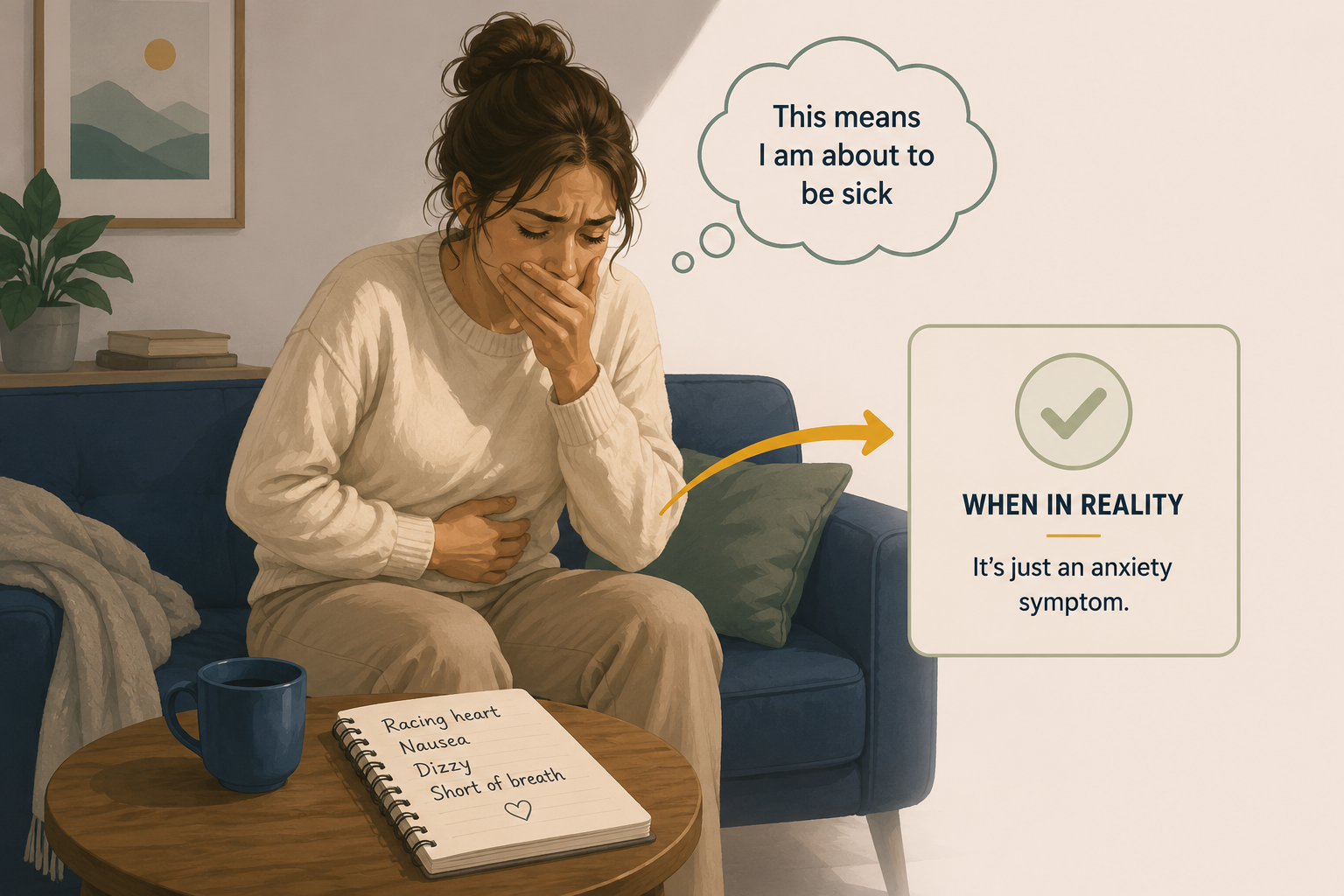
These interpretations are incorrect but feel very convincing in the moment. The issue that that these misinterpretations gets registered as a danger. Often a life threatening danger. This activates your anxiety system further, and it then intensifies those physical symptoms or causes more of them. This escalation of symptoms then gets used to validate the original misinterpretation (e.g. ‘Now I feel really nauseous! I know I am about to be sick!’). This then further increases your anxiety and the cycle continues until you have a panic attack. Essentially, panic attacks are when you become anxious about anxiety symptoms because you don’t recognise them as normal symptoms.
If you have had panic disorder for a while, it is also possible to interpret these symptoms as the start of a panic attack or that the situation you are in must be dangerous. Because a panic attack is a truly awful experience, they themselves can be seen as a threat. This interpretation alone can be enough of a threat to get you trapped into this cycle.
This cycle can be represented by the yellow arrows on the diagram. There is a secondary cycle that we will talk about later which is represented by the white arrows. But to briefly summarise it, the actions we often take due to our interpretation, prevent us from realising we are misinterpreting these symptoms and cause you to continue to experience future episodes of panic attacks. We will come back to this later.
CBT Self-Help for Panic Attacks and Agoraphobia
I have written a whole practical guide to overcoming panic attacks and agoraphobia based on my years working in the NHS treating both conditions. The book can be found on amazon or in my webstore.
Written by David Kaneria

CBT Therapist
Author of
‘Therapy for Panic Disorder and Agoraphobia Made Easy’
What Is the Anxiety Fight or Flight Response?
Why Does Anxiety Feel So Intense?
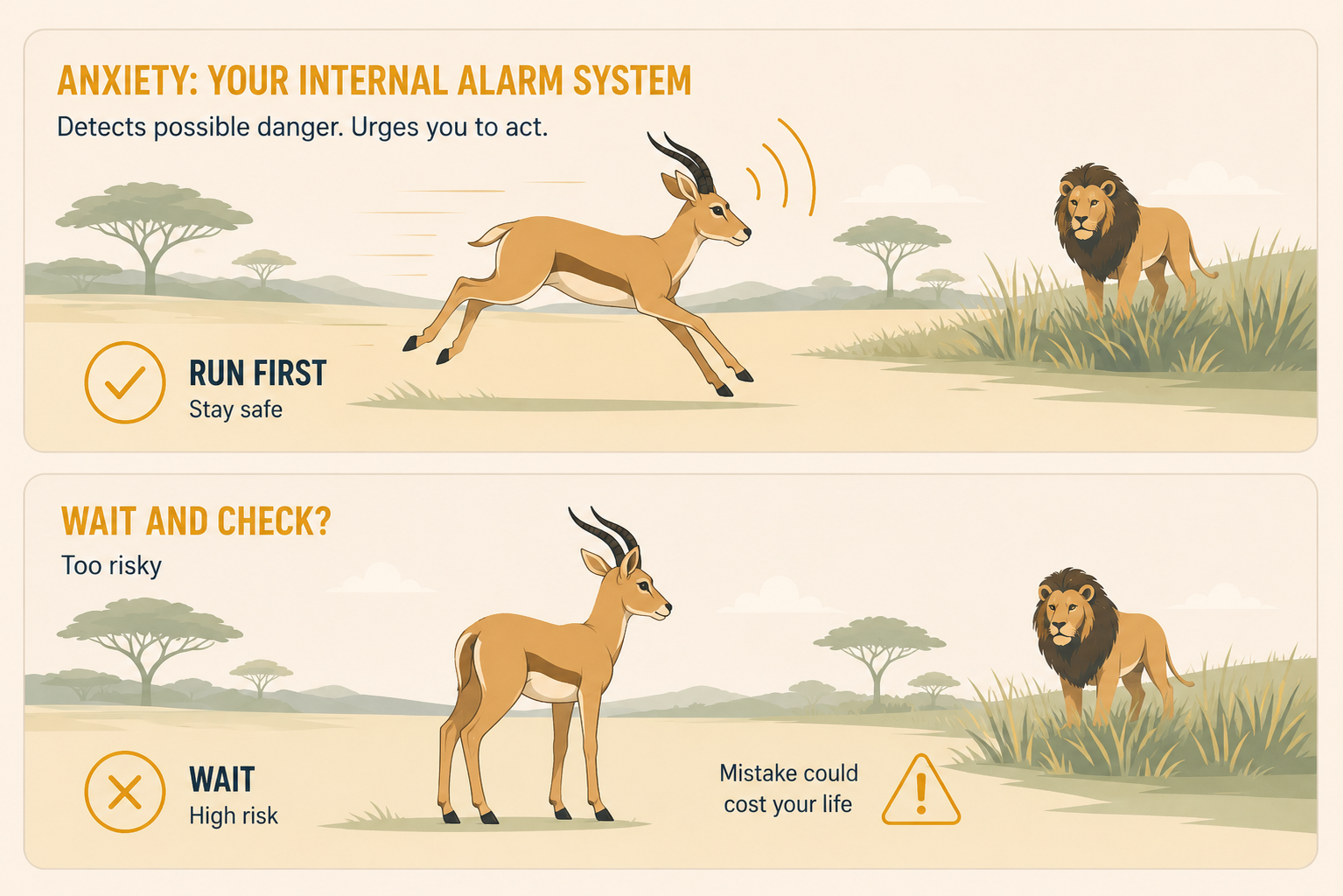
The reason anxiety feels so bad goes back to the purpose of it. Anxiety is a warning alarm that you have perceived a danger. Regardless of if the danger is real, imagined or incorrect, your body wants you to react to it.
This makes sense when you think about it. Imagine you are a gazelle in Africa on the Serengeti and you hear a notice behind you that might be a lion. It is safer to start running and be wrong, than it is to wait, turn around and check if the sound right behind you is a lion. One action, saves your life and if you are wrong you only wasted a bit of energy running away, while the other is a mistake that could cost you your life.
If the Gazelles alarm system was easy to ignore, it might make the wrong choice. We are no different. If anxiety did not feel bad, we would most likely just ignore it. This is the same reason fire alarms are so loud. So you can not ignore them. The second reason anxiety feels so bad is due to something called the fight or flight system.
How Does the Fight or Flight Response Work?
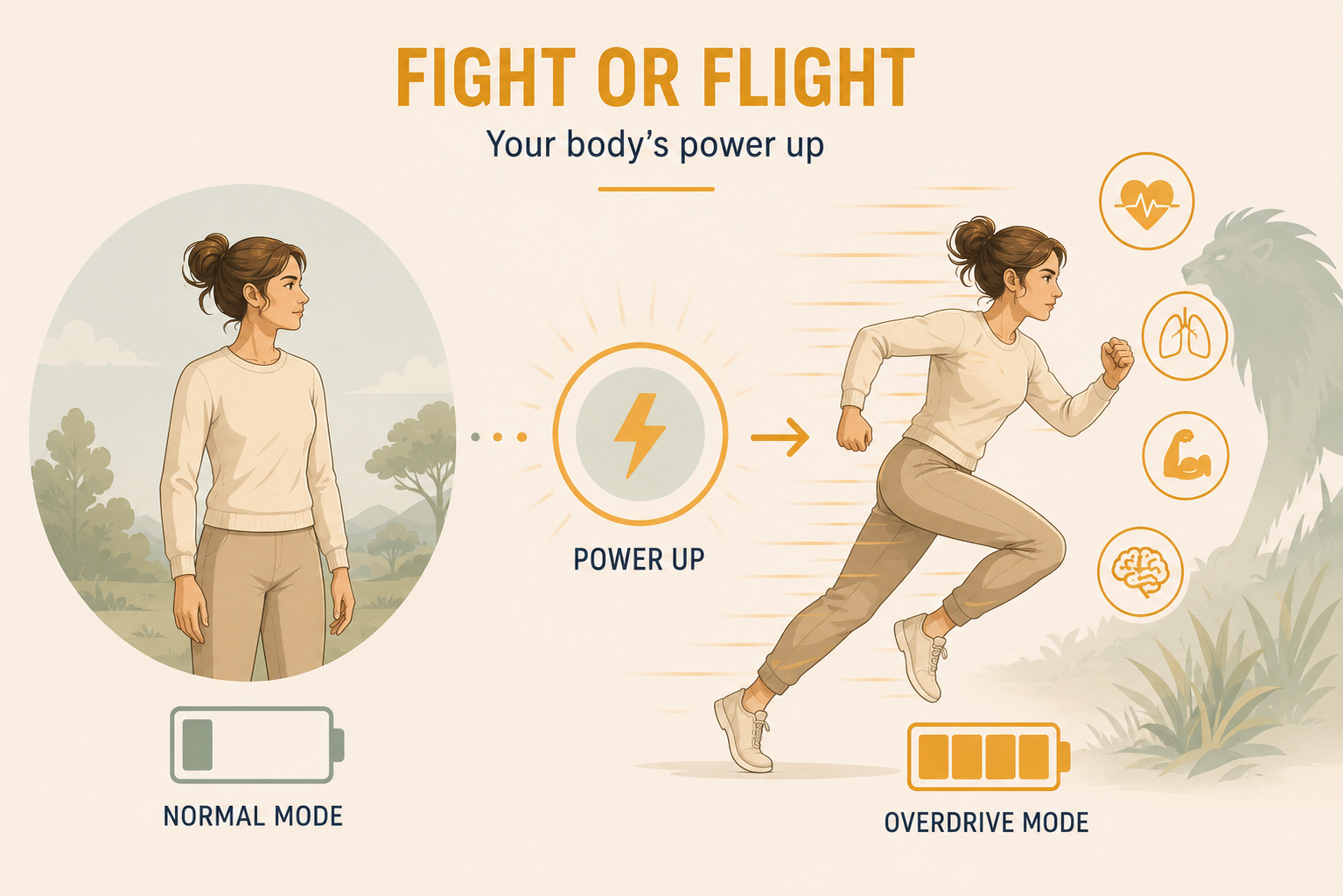
The fight or flight system is the bodies response to dangerous situations. It is when your anxiety system puts your body into overdrive so that it is best able to run away from a danger or to fight it. Think of the fight or flight system like a special temporary ‘power up’ button that you can press in a video game when you fight a boss or really need it. This power up button does a whole lot of changes in your body which push you into peak performance to be able to handle the threat. These changes although helpful can feel really intense, uncomfortable and are not pleasant. These changes are not what your body is used to and are only designed for a short term use.
How Does the Fight or Flight Response Work?
Let's look at an example of a burglar to show how the fight or flight system works:
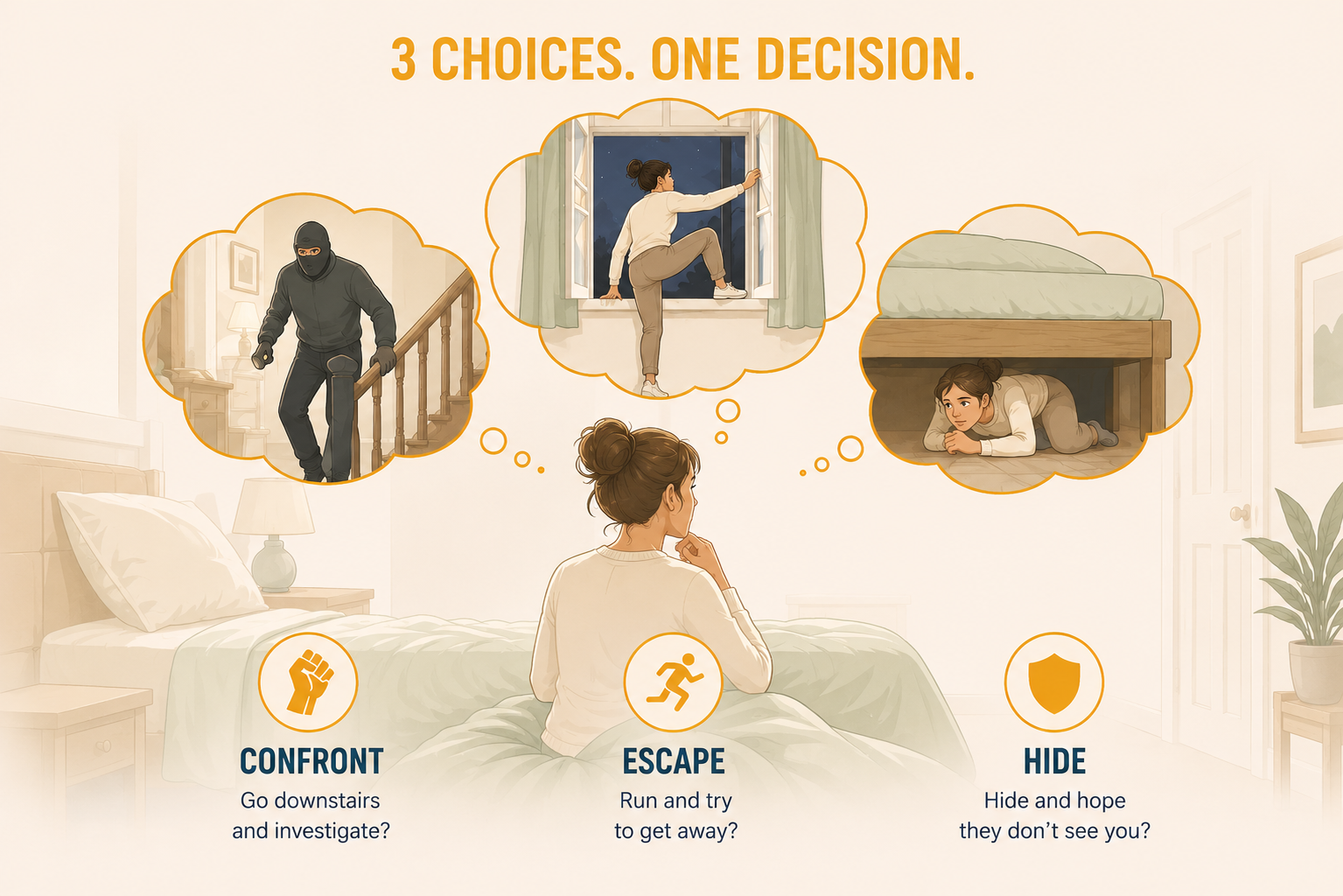
Imagine late at night you hear a strange noise downstairs. This is an unusual noise. You fear there is someone downstairs. A burglar!
You are unsure what to do but have to make a choice:
Do you decide to go downstairs to investigate? You know you may have to fight off the burglar!
Would it be best to try and run? Your bedroom window has a ledge. You could attempt to escape?
Or should you hide? and hope they won't see you?
Close your eyes and imagine this situation. Regardless of your choice, what physical symptoms you would experience in this situation?
So what physical sensations did you come up with?
Your heart might start to race.
Your breathing speeds up.
Your mind might race.
Your legs start to shake.
Your muscles tense.
Your stomach churns.
You feel dizzy.
You might feel nauseous.
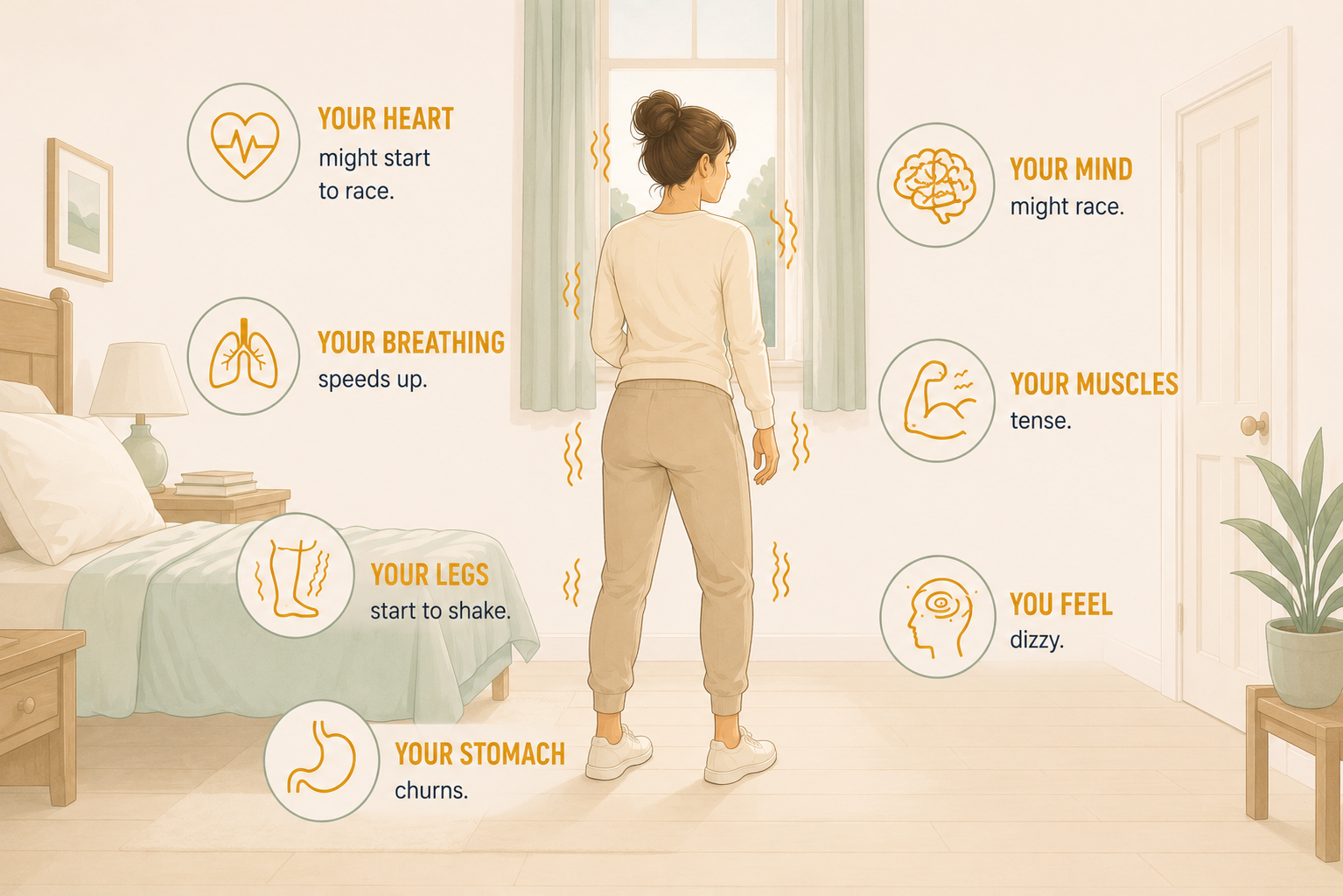
All of these symptoms are normal and make sense given the situation. In that moment, these symptoms are unlikely to get misinterpreted because the person recognises the trigger and so these symptoms make sense.
The thing about your anxiety system is that it reacts with these symptoms to any threat, regardless of it is it physical or not. So if you are extremely stressed about a bill, exam or deadline, your body just see’s a threat. And it only knows two ways of dealing with threats. Run away or fight it. Neither of these are correct for the situation, but it doesn’t matter. Your body reacts as if you are being burgled and these symptoms occur to power you up. These symptoms now make no sense and can be easily misinterpreted.
This is because these anxiety symptoms often feel awful and seem to have little benefit. So how are these symptoms a ‘powerup’?
Fight or Flight Symptoms During Anxiety and Panic Attacks
The fight and flight system has a whole load of changes it can cause. Not everyone will personally get each symptom each time. Typically people notice the symptom they are most afraid of and sometimes barely notice the ones they are not afraid of.
Each symptom is either deigned to save your life by allowing you to run, fight, hide or think about threats better, or are a side effect of something else that is doing one of those things.
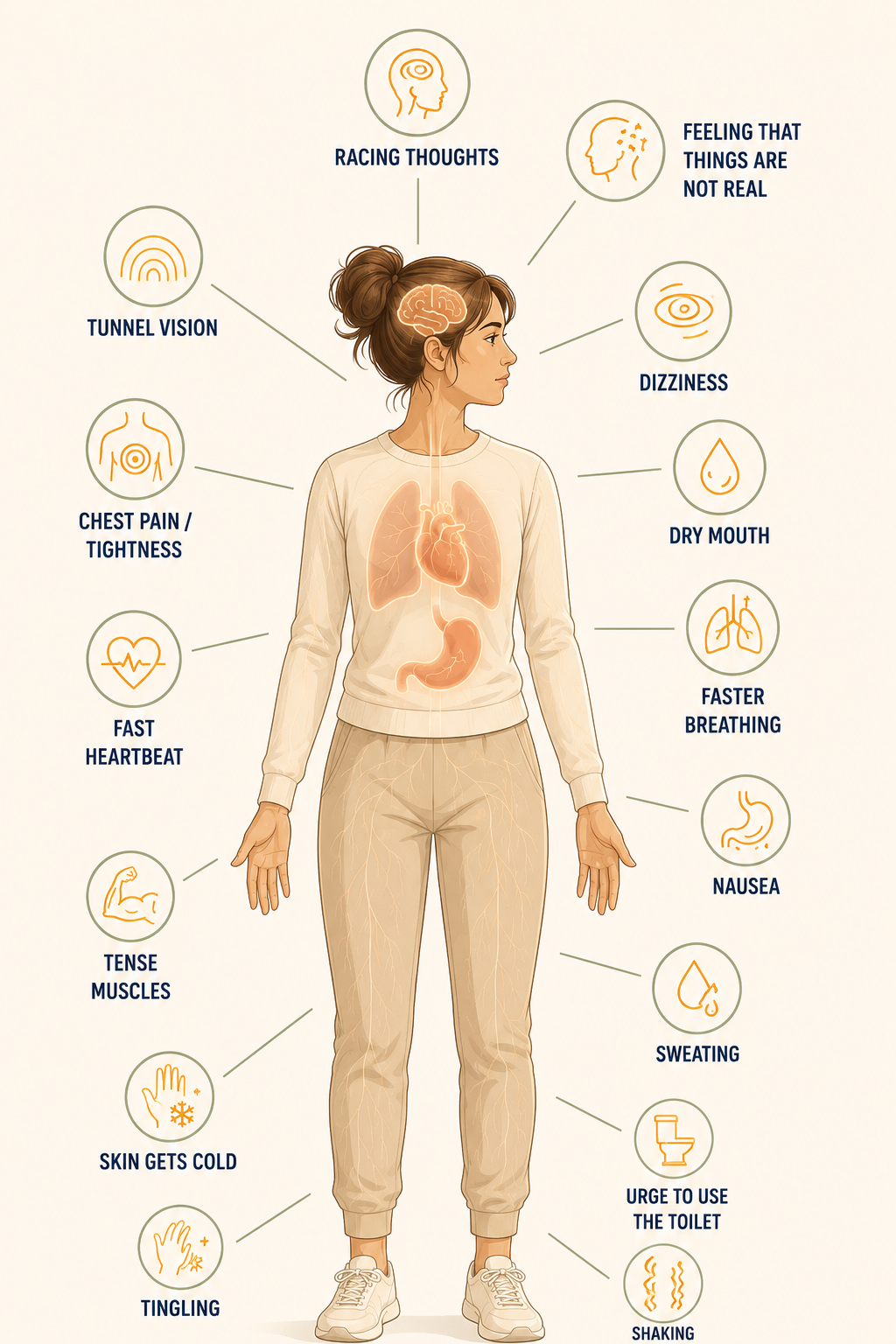
Why Do I Get Racing Thoughts During a Panic Attack?
Racing thoughts can often get misinterpreted as a sign that you are going crazy. However, racing thoughts are actually caused when your body floods your system with adrenaline. Adrenaline is designed to prepare your muscles to run or fight, but it also accelerates your mental processing, making your thoughts feel like they are spinning out of control. This can allow you to think about threats faster.
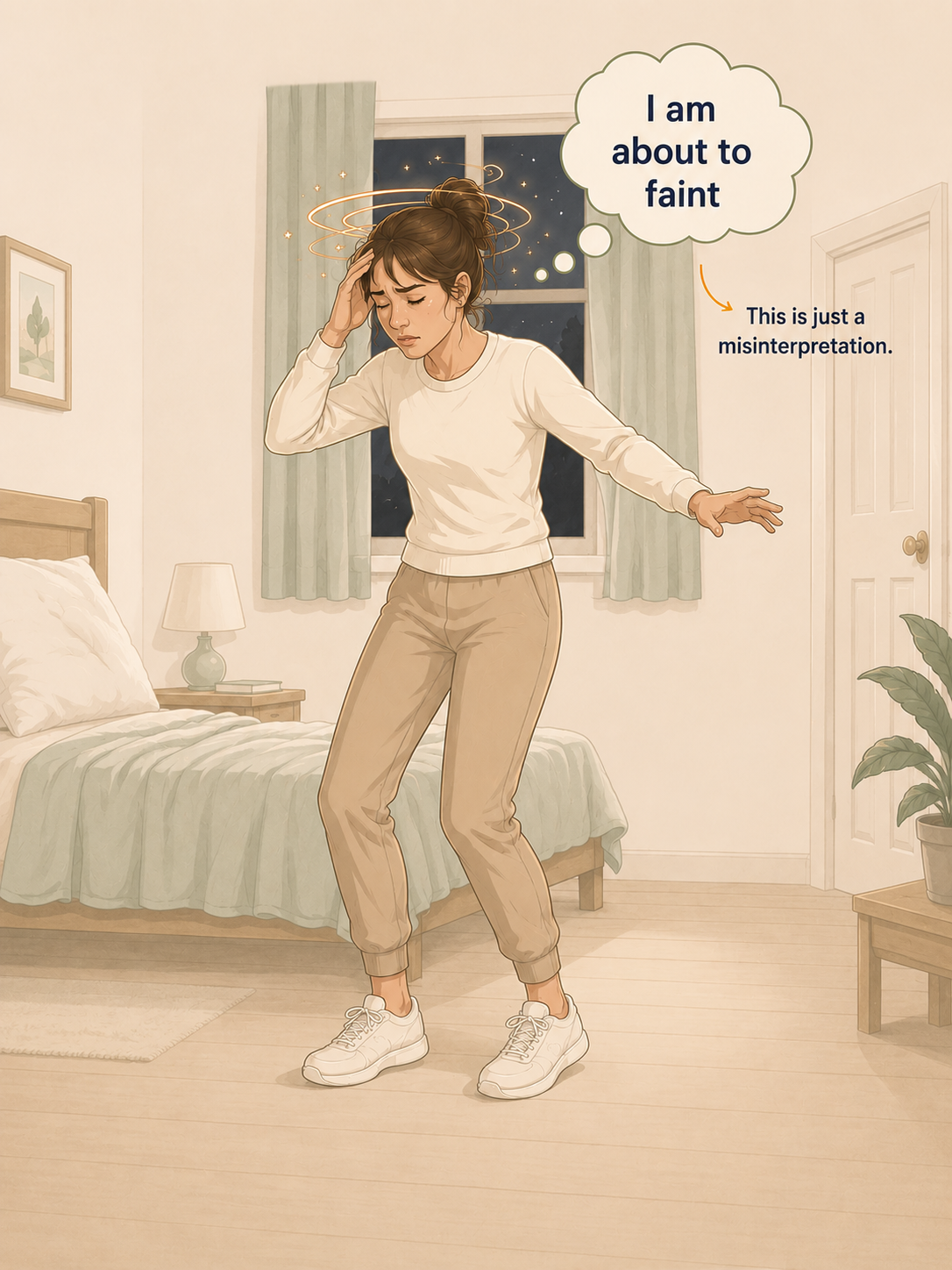
Why Do I Feel Dizzy During a Panic Attack?
Dizziness often gets misinterpreted as linked to fainting. However, it is almost impossible to pass out due to a Panic Attack. The Fight or Flight response increases blood pressure, making it impossible to faint. This response is intended to help you respond to potential danger, so passing out would go against this. The only exception is if someone has a specific phobia of blood, injury, or needles, which can cause blood pressure to drop and cause fainting.
The reason why dizziness occurs during a panic attacks is due to changes in blood oxygen and carbo dioxide levels that is caused by rapid breathing. This breathing is designed to get more oxygen into the blood stream but causes the side effect of dizziness.
Why Does Everything Feel Unreal During a Panic Attack?
During a panic attack it is common for people to feel as if they, others or the world is not real, strange or that they are outside of their body. This is called Derealisation and Depersonalisation and often gets misinterpreted as a sign that you are going crazy. However, both these symptoms are deigned to keep you safe. Your brain temporarily alter how you experience yourself and your surroundings. This emotional detachment, makes frightening situations feel less intense and allowing you to continue functioning and thinking. This also aids if you decide to hide from a threat instead of fighting or running away as it helps you stay inactive and still. Also, the body becomes highly focused on the environment to scan for threats. This can make you feel outside of your own body. Adrenaline and racing thoughts can add to this feeling.
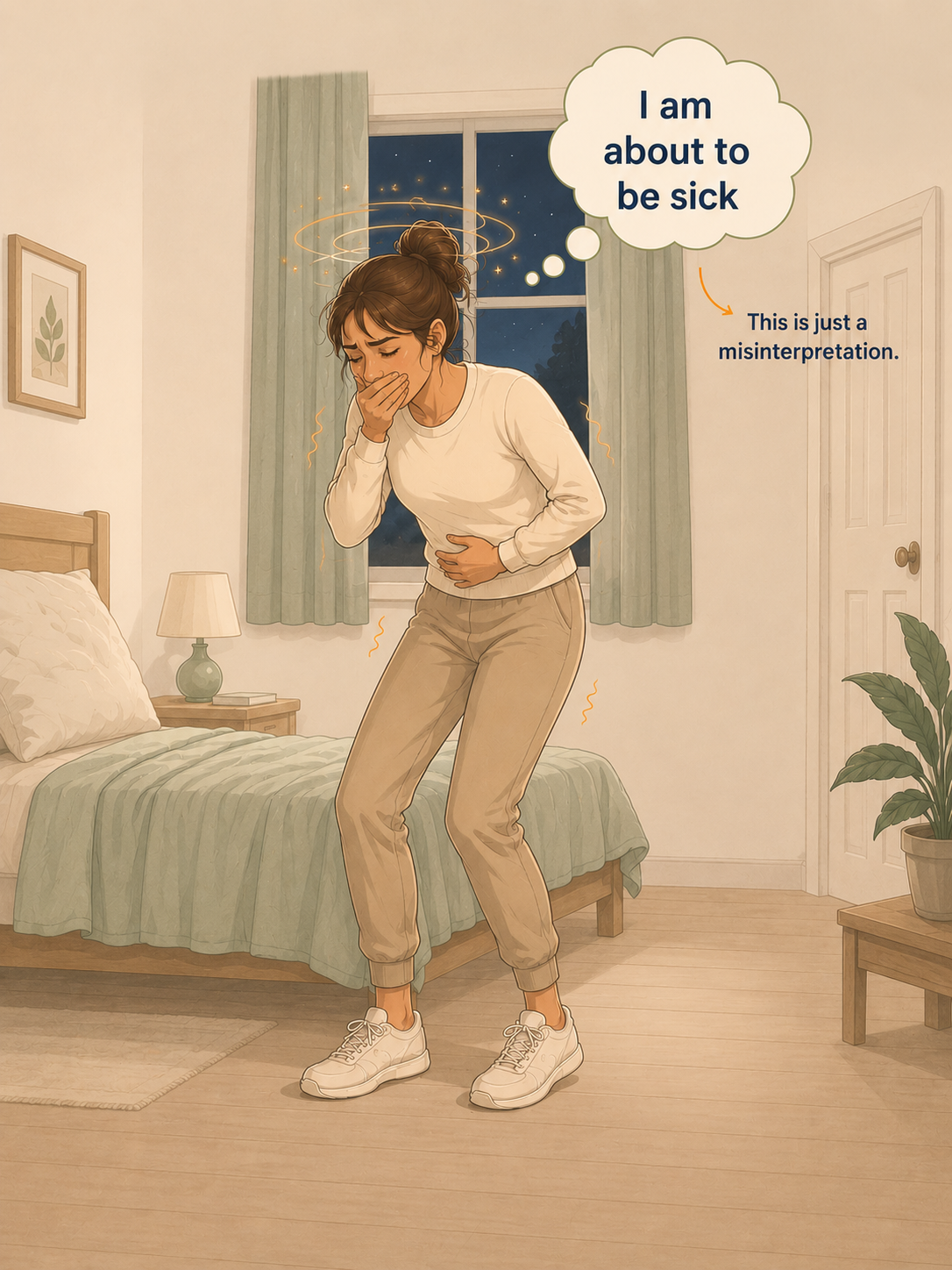
Why Do I Feel Nauseous During a Panic Attack?
Imagine you were on a trip without a phone charger and you want your phone to last the day. The first thing you do is to swipe off apps you don’t need, turn off your Bluetooth, or maybe turn of your internet to make your battery last longer. Your body does the exact same thing when anxious, it reduces any systems which are not needed in that moment such as your digestive system. When your digestive system is paused, your body naturally doesn’t want you to eat so it sends you a powerful signal telling you to stop eating. This signal is nausea. Often this nausea gets misinterpreted as the chance of vomiting. However, this nausea in reality is simply your body's way of pausing digestion so it can focus all of its energy on keeping you safe.
Why Do I Feel Like I Can't Breathe During a Panic Attack?
During a panic attack, breathing speeds up, muscles tighten and your heart rate increases. People often start to slouch or bend over slightly due to their panic. These add up to cause you to feel like you are not getting enough oxygen in and often gets misinterpreted as not being able to breathe or that you might suffocate. However, this is just a sensation. In reality your body is getting in enough oxygen. These changes are designed to increase the amount of oxygen so muscles have enough to run or fight the threat.
What About The Other Symptoms Panic Attacks Cause?
There are a lot of different symptoms that anxiety can cause that are very safe but often get misinterpreted. if you experience any other symptoms, try googling why they occur. A full list of symptoms and misinterpretations can also be found in my book.
Why Does Fear of Another Panic Attack Cause More Panic?
If you have had panic disorder for a long time, you might start to realise that these symptoms are not dangerous. However, a new fear can develop in its place. The fear of having a panic attack. All anxiety symptoms have the potential to be misinterpreted as a sign of a panic attack starting. This then becomes a self-fulling prophecy. Because you fear these symptoms are a sign of a panic attack, you raise your own anxiety and start the cycle and create a panic attack.
So how is this a misinterpretation if it is correct?
It is important to realise that these symptoms are not what cause panic attacks. They are just symptoms of your fight and flight response. On their own they can never become a panic attack. A panic attack comes from the interpretation of these symptoms.
Fear of What Might Happen During a Panic Attack
Sometimes your misinterpretation might not be about the symptoms themselves but the consequence of having a panic attack. For example, you might have fears about how others will react to you having a panic attack (e.g. people might stare, my boss won’t be happy, others will panic and call an ambulance, or it will be embarrassing). These thoughts raise your anxiety, which trigger more symptoms which then validates that you will have a panic attack and that these fears might happen. Creating a panic attack.
How to Reduce Panic Attacks Using a CBT Panic Diary
One of the best ways to stop panic attacks is to start to realise that our interpretations of the symptoms are highly inaccurate. This can be achieved by keeping a diary of each future panic attack you have. This allows you to start seeing your misinterpretations and how inaccurate they are in real time. If you can start to change the misinterpretation in the moment, your anxiety has nothing to feed off and it interrupts the panic cycle.
How to Keep a Panic Attack Diary
A panic diary is really simple. It is just a chart where you can start to collect data. It is best if you can fill this out either during a panic attack or shortly after it ends.
The diary should captures a few key bits of information:
The date: Write down when your panic attacks occur. This can help you see patterns or triggers you may not be aware of.
The triggering situation: Write down what was going on before your panic attack. All panic attacks have a trigger. Often we miss these triggers which increase the change of us making an misinterpretation of our symptoms. Sometimes a trigger can just be underlying stress, deadlines or even bad dreams.
The symptoms you dislike: Write down the symptom/s that worry you the most. These are the ones you are misinterpreting.
Your anxious interpretation: Write down what you think that symptom means. Often this misinterpretation is a risk to yourself (being sick, heart attack, or another medical problem) or can even be that the symptom means you are about to have a panic attack or that you won’t cope staying in your situation with these symptoms.
Your coping behaviours: This part is important and will be used later on. Write down what actions you take to cope in that moment. Write down anything you do to 1) stop the anxious outcome you are predicting, and 2) what you are doing to prevent or stop your anxiety.
An alternative explanation: After this, write down what an alternative explanation is for those symptoms you fear. Do not just write down ‘anxiety’ or ‘the fight or flight response’. Write down how this symptom is helpful, designed to keep you safe or is a side effect of something else that is helpful. If you are not sure, google why that symptom is helpful when anxious or read that section in my book.
Hindsight review: After your panic attack is over. Fill out the last column. Now you have hindsight. Who was right, your anxious interpetation or the alternative explanation.
Here is an example chart:
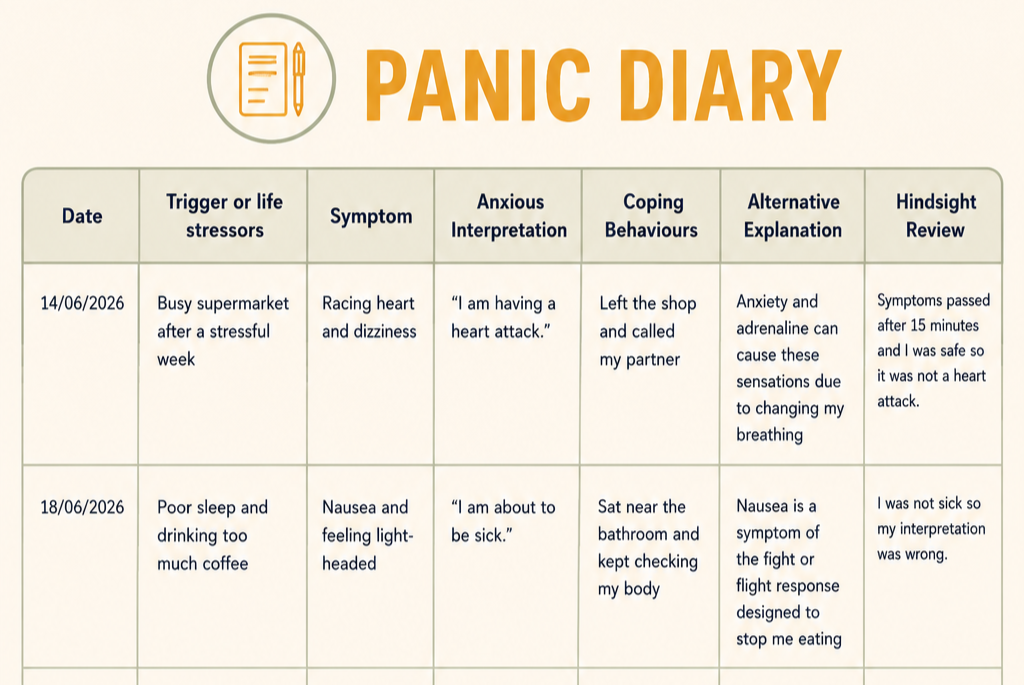
Try filling this out for a while. The whole point is to help you change how you view these symptoms. If you stop catastrophising them, your anxiety cant grow and panic attacks can not occur. Once you have done this for a few weeks and learnt something about your thoughts, move onto part 3.
Night-Time Panic Attacks: Why Do They Happen?
Some people report waking up having a panic attack or get ‘panic out of the blue’ without a trigger. However, research has shown that this is not true. Usually something activates your fight or flight response while asleep. This could be a bad dream or underlying stress. So you wake up with any symptoms. Then you instantly make an interpretation of what these symptoms mean. because you missed the trigger, it is easy to misinterpret what is happening as a medical problem or a panic attack. This then triggers the cycle and your anxiety gets worse, which then validates your misinterpretation and a panic attack occurs.
When filling out your diary, try to catch the misinterpretation in the seconds in-between waking and the panic attack starting.
Once you done this for a week or two, move onto part 3