

Starting Conversations About Emetophobia: A Parent and Therapist Perspective
Emetophobia can be a difficult fear for children and adults to talk about. It can feel confusing and isolating, not only for the person experiencing it but also for those supporting them.
In this blog, Dr Ffion Jones, author of Bodie and the Ghost Showdown, shares her perspective as a parent alongside BABCP-accredited therapist David Kaneria, who specialises in treating emetophobia. Together, they explore how we can better understand emetophobia and have more supportive conversations with children and families.
1. What is emetophobia, and why can it be so misunderstood?
Therapist perspective
Emetophobia is the extreme fear of vomiting and effects up to 7-9% of people. Whilst no one likes being sick, those with Emetophobia are often show extreme emotions like anxiety and fear about anything related to being sick. Emetophobia is a truly disabling condition that often effects every area of the suffers life.
Emetophobia comes along with a wide range of strong emotions such as:
Anxiety.
Fear.
Disgust.
Anger.
Sadness.
These emotions usually then cause the person suffering to try and monitor, prevent, avoid or overthink their chance of being sick. These behaviours often only raise anxiety and create a continuous loop between anxiety and trying to prevent sickness.
Luckily, treatment is highly effective for it.
Parent perspective
Although many people haven't heard of it, emetophobia is far more common than most people realise and often begins in childhood.
We found that what starts as a fear of being sick can gradually spread into many different areas of a child's life. Sleepovers, school trips, public transport, parties, restaurants, certain foods and activities they once enjoyed can all begin to feel unsafe. Children start to avoid anything that might possibly lead to vomiting, or even feeling nauseous. And over time, that list often grows and a child's world becomes smaller and smaller.
We watched this happen with our daughter, as the fear and anxiety began to affect her confidence. At times, it became too much and she missed out on things she really wanted to take part in. But even in those early days, there were moments when she found ways to ride the waves. Even during periods of severe nausea and the overwhelming fear that came with it, she would still take part in things, often without anyone knowing what she was experiencing physically beneath the surface.
Like my daughter, many children with emetophobia become very aware of every sensation in their body. A tummy ache, feeling too full after eating, feeling nervous or having a fluttery tummy, or simply noticing a normal sensation in their stomach can all be interpreted as a sign that they are about to be sick. The anxiety this creates can be overwhelming so avoiding situations can feel like the safest option in that moment. Unfortunately, like David says, this avoidance may bring short-term relief but it strengthens the fear and keeps the cycle going.
As both a parent and an emotional wellbeing practitioner, I had a good understanding of anxiety but I found that supporting your own child through emetophobia brings a completely different perspective. One of the biggest challenges is that emetophobia is often misunderstood. It can be mistaken for general anxiety, school avoidance or even an eating disorder and can sometimes look like a child is simply avoiding things or refusing to take part. But for the child living with emetophobia, the fear and physical symptoms are very real. The first step is to understand what lies beneath certain behaviours.
2. Why do children often find it difficult to talk about emetophobia?
Therapist Perspective:
Children struggle to talk about their emetophobia for several reasons. For starters, emetophobia is rarely talked about and even many health professionals have limited knowledge or have never heard of it. As a result, children may not realise that their fear has a name or that others experience the same difficulties. In addition, children can lack the words or understanding needed to explain what they were experiencing. They might complain of feeling anxious, unsafe, uncomfortable or complain of their physical sensations such as a tummy ache but not be able to articulate what they are fully afraid of. Luckly the internet and social media has helped many young people find the term ‘emetophobia’ and give words to their experiences.
Some children may struggle to open up due to embarrassment or the belief that their fear is silly or if they have previously felt misunderstood when trying to explain their anxiety. This is made worse by the fact that many of those with emetophobia often find it frightening to talk about vomiting itself and avoid words such as ‘sick’ or ‘vomit’ because it triggers anxiety, nausea or uncomfortable mental images.
Parent perspective
It is difficult because emetophobia is rarely talked about or understood so children can worry that people won't understand them if they open up, which can lead to feelings of embarrassment and shame. Also, children don't always have the words or confidence to explain what is going on for them. One of the reasons I wrote Bodie and the Ghost Showdown was because I wanted to give children another way into these conversations. Rather than talking directly about themselves, they can first talk about Bodie and the ghost. The ghost represents the fear, allowing children to see that anxiety is something they experience rather than something that defines who they are.
3. How can parents start conversations about emetophobia without making the fear feel bigger?
Therapist perspective:
Children often need a calm, curious and non-judgmental space to talk about their fears. It is important to listen, empathise and validate their fear. If you think your child has a phobia, start by sharing something you are afraid of or talk about people you know with other fears.
Parent perspective
Sometimes, it can be a difficult balance between acknowledging the fear without allowing it to take over. For us, the most helpful conversations became about helping my daughter to understand what anxiety was doing and how she could respond to it differently – for example, saying things like, “We know anxiety is there, and we’ll help you to keep doing the things that matter to you even when it feels difficult.”
One turning points for us was externalising the fear. My daughter created her own fear character long before I wrote Bodie and the Ghost Showdown and separating the anxiety from who she was helped to change the way we talked about it. Rather than arguing with her fears, it helped her recognise when the character was making scary predictions, demanding reassurance or encouraging avoidance. It also made it easier for her, and for us, to talk back to it with more confidence. That became the inspiration for the ghost in Bodie's story and changed the way I responded as a parent. Together, we made a plan that focused on supporting my daughter through the uncertainty rather than answering anxiety's repeated questions. Instead of repeatedly reassuring her, I could say something like, "I know you're worried, and I'm here with you, but I'm not going to answer what your fear is asking because that helps it stay in charge."
That wasn’t easy at first, for her or for me. Our instinct as parents is to remove our child’s distress and help them to feel better quickly, but doing so doesn’t give them the opportunity to discover that they are capable of coping with uncertainty themselves. Instead, over time, by reducing reassurance and consistently encouraging small, manageable steps forward, we began to move away from feeding the anxiety and towards building confidence.
4. Why is reassurance not always helpful?
Therapist Perspective:
Most people with emetophobia seek reassurance about their fears. Your child may ask if food is okay to eat, if other have been ill or if their tummy ache means they will be sick. It is natural to want to provide reassurance to calm your children down. However, this only provides short term relief but unintentionally grows their fear of being sick. Your child’s anxiety system learns that the only think keeping them safe and calm is asking questions. This might work for a while, but as the fear grows the reassurance fades quicker, is less helpful and becomes a pre-occupation.
Parent perspective
As both a parent and through my professional work, I understood how anxiety works. But when my daughter developed emetophobia, I sometimes felt completely stuck. It feels very different when it's your own child in front of you, terrified and asking you for answers.
My daughter would ask questions like, "Am I pale?" or "Do you think I'm going to be sick?" I would answer and give reassurance because it calmed her in the moment. She felt better, and as a parent, that felt like the right thing to do because all you want is to take their fear away as quickly as possible.
The trouble is that reassurance reduces the anxiety temporarily but it doesn’t reduce the phobia – it strengthens it over time. Every time anxiety is answered with reassurance, avoidance or another safety behaviour, it reinforces the message that vomiting really is something dangerous that needs to be prevented at all costs. Instead, as hard as it is at first, children need the opportunity to discover that they can cope with uncertainty and that the anxiety will eventually pass without needing reassurance.
Breaking that cycle definitely isn't easy - it means responding differently, even when it feels really uncomfortable. But when you start to see those small steps forward, and your child begins to realise they don’t have to do what anxiety is telling them to do, things start to shift in the right direction.
5. What does facing emetophobia actually look like?
Therapist Perspective:
Facing emetophobia can be done in many ways. One of the most important ways is to stop reacting to the fear. When we are afraid of something we start to use something called “safety seeking behaviours”. These are actions that are done to monitor, avoid, prevent or mentally deal with anxiety or sickness. Unfortunately. these behaviours keep you trapped into your fear. Facing Emetophobia can be as simple as resisting the urge to use these behaviours when scared. For example, if a child has to ask for reassurance before leaving the house to go to school, they can attempt to go out without asking and see what happens. When they go out and nothing bad happens, they can learn that reassurance seeking was not needed.
Parent perspective
One of the messages I wanted children to take from Bodie and the Ghost Showdown is that anxiety doesn’t have to disappear before they can start doing the things they want to do. It’s more about learning that you can feel anxious, uncomfortable or uncertain and still take small steps forward - like saying yes to something you’ve been avoiding even if it still feels uncomfortable at first, or asking one less reassurance question or learning to tolerate uncertainty for a little longer each time. It’s also about taking those steps without relying on the things anxiety tells you to do to feel safer in the moment, such as checking, avoiding or asking for reassurance. When those small steps start to add up, they can make a big difference. And it’s important that children know that even if you go backwards sometimes, that doesn’t mean you’ve failed, because you can always start moving forwards again.
That’s what happens in Bodie and the Ghost Showdown. The ghost doesn’t suddenly disappear. Instead, Bodie learns that she doesn’t have to obey everything he tells her. She starts to challenge his rules, and as she does, the ghost has less influence over her life. By the end, Bodie is the one in the driving seat.
6. How can stories and imagination help children with anxiety?
Therapist Perspective:
Stories are a powerful way of helping children learn new information, concepts and ideas. Reading about others overcoming similar fears can help children feel less alone and understand that other people have similar thoughts, feelings, worries and take similar actions.
Stories can also provide distance from their fears and allows them a less direct and safe way of exploring their emetophobia. Talking about themselves directly can be challenging, but talking about a relatable fictional character can feel safer.
Stories can help children imagine new possibilities. Seeing a character face their fears gradually, cope with uncertainty and discover they are more capable than expected can help children start to picture this possibility for themselves. Stories offer hope in a very visual way which is hard to provide just by talking.
Parent perspective
Like David says, stories can give children a safe distance to explore difficult experiences. Instead of feeling like the spotlight is on them, children can explore anxiety through a character, which can feel much less threatening and give them the space to think about what is happening without having to talk about their own worries straight away.
Stories can also create curiosity rather than fear. Instead of asking a child to explain their own worries, we can ask questions about the character- “What is the ghost trying to make Bodie believe?” or “What helped Bodie stand up to the ghost this time?” - which can feel much less overwhelming but still help children recognise and reflect on what anxiety is doing.
It’s also really comforting and powerful for children to see a character face the same kinds of fears and challenges they are experiencing themselves. They can see someone face fears, make mistakes and take small steps forwards and discover that things can change, which can help them begin to imagine that change and recovery may be possible for them too.
Stories can also help the adults around a child. Through Bodie’s experiences in Bodie and the Ghost Showdown, parents, carers, teachers and professionals can begin to understand what living with emetophobia can actually feel like. When the adults around a child understand what is happening, it is easier to work together to support recovery.
That was also why I included a practical guide for parents, carers and professionals alongside the story. When my daughter first developed emetophobia, I was desperately trying to understand what was happening and how best to help. So I wanted families to come away from the book feeling understood but also with practical strategies they could begin using straight away.
6. What would you want parents, teachers and adults supporting children with emetophobia to remember?
Therapist Perspective:
Phobias can often appear irrational from the outside. To you, being sick may not seem frightening or dangerous. However, for a child with emetophobia, their mind and body is screaming that they are in danger.
Emetophobia is often taken less seriously than other more known phobias, such as a fear of spiders. However, emetophobia is often the worst phobia because sickness cannot always be avoided or escaped. If you are afraid of spiders, you can move away from one or leave the situation. With emetophobia, your fear is always present because they are afraid of their own body and it will happen to you at some point.
Imagine someone with as spider phobia living with the feeling that a large spider could suddenly appear and jump onto you at any moment, without warning and with no guaranteed way to prevent or escape it. This is how those with emetophobia often feel all of the time.
The most important thing to remember is to show the child with compassion, patience and curiosity. Their fear may not feel logical to you, but it feels very real them. Listen without dismissing, teasing, or trying to immediately convince them there is nothing to worry about. However, at same time, supporting them does not mean helping them avoid everything that makes them anxious or repeatedly promising that they will not be sick. Although avoidance and reassurance may provide relief in the short term, they only unintentionally strengthen the fear over time.
Parent perspective
I think there needs to be more awareness that emetophobia is much more than a fear of being sick. For the child experiencing it, the fear feels real, overwhelming and, at times, all-consuming. It can also come with physical symptoms which can feel very frightening. What might look like avoidance, overreacting or becoming withdrawn is often a child doing everything they can to feel safe in that moment.
So what they need from us is help to understand what anxiety is doing while staying alongside them through it and gently encouraging them to keep moving towards the things that matter to them, even when fear is screaming at them not to. Instead of trying to take away the feelings of anxiety, which is a natural instinct as a parent, it’s about building their confidence in their ability to cope with and manage those feelings so that fear isn’t making all the decisions.
I also think it’s important for parents not to panic when there are setbacks, which is easier said than done! Sometimes things will feel difficult again and you might have days where it feels like nothing is changing but that doesn’t mean you’re back at the beginning. Your child still has all the understanding and practice they’ve built up and they can start moving forward again.
For parents, I think it’s important to know that you’re not alone. It can be really isolating and exhausting, especially when you’re watching your child struggle and you’re not sure what to do to help. But it can get better and having the right support can make such a difference.
If a child with emetophobia was reading this, what would you want them to know?
Sadly, you cannot outrun anxiety, you cannot hide from it, prevent it or avoid it forever. But you can change how you feel about it. You can learn to accept it, not to fear it and to not let it stop you from living the life you want. You don’t have to feel afraid forever and help is available when you are ready.
Parent perspective
The scary thoughts and worries can feel convincing but they don’t get to decide who you are or what your future looks like – you’re much more than your fear.
It’s also okay to feel scared. You don’t have to wait until the fear goes away before you start doing the things you want to do. Sometimes it’s just about taking one small step every day, even when anxiety is telling you not to. And some weeks those steps will be tiny but that’s okay too. Tiny steps over time still move you forwards.
So even if it doesn’t feel like it right now, things really can get better. Like David says, you can learn to live with anxiety without letting it be in charge, and little by little, your world will become bigger again.
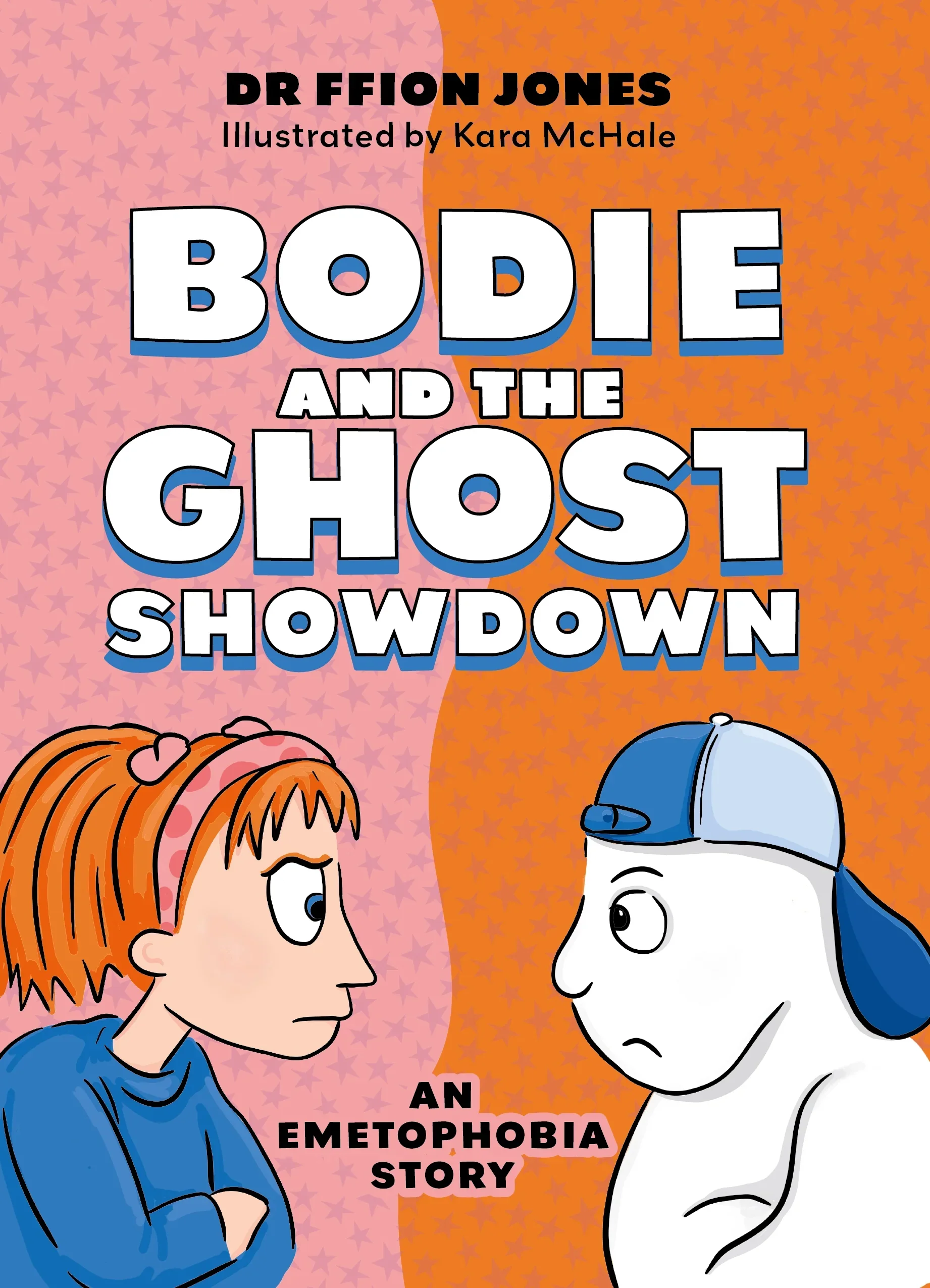
Bodie and the Ghost Showdown: An Emetophobia Story
Bodie and the Ghost Showdown is a heartwarming story that gives children 7+ the tools to understand and overcome emetophobia. Blending humour and hope, with relatable characters, it's an empowering read for any child facing anxiety. The book also includes a guide for parents, carers, and professionals offering step-by-step suggestions for supporting kids with emetophobia. With practical tips and discussion prompts, it equips adults to assist children in applying the lessons of the story to real life.